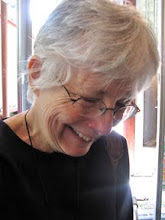
I've been away for a long weekend in Newport, Rhode Island. My friend bought a little summer house there in 2003, and I've been going there for rest time ever since I entered the community. I actually lived in Newport once, a million lifetimes ago. It's always just a little weird to go back.
Most everything has changed (for the better) but the sight of old buildings, wrought iron fences, sailboats in the harbor... all jog memories of my first attempts at homemaking and child raising. My older son was three weeks old when we moved into one of three converted chicken coops in Middletown, RI. Later we moved to an upstairs apartment in the Portuguese section of Newport, just off Thames Street. We found that apartment, but never could locate the chicken coops. They must have torn them down.
This trip there were four of us, (all team members from the last Cursillo weekend) and they all knew me "before". They all work: one is a lawyer, another a school principal, another a creative consultant, coordinating communication packages for corporate benefit plans. I was once a member of their hectic and hassled lifestyle. Now I'm different. My body clock is hardwired to my monastic schedule early to bed and early to rise... and that made me a party pooper most nights. It also meant I was generally the first one up.
The ritual of quietly padding down the wooden stairs in my bare feet to turn the coffee on... that was lovely. The stairs are quiet, (unlike our convent stairs that creak and groan) so the only perceptible noise was my ankles crunching. If I step carefully the sound is deceptive, but when I move quickly the rhythm matches that of those little rice-filled eggs we shake at our drumming circles. My rice-filled ankles made me smile.
I did things, ate things, enjoyed everything that is no longer part of my life as a sister. I read novels, stayed in my jammies all morning, didn't make my bed. I ate fried clams, lobster, hot pastrami sandwiches. I went shopping. At the same time, my internal censors were on keen alert this year... everything from not composting garbage to soft toilet paper to sleeping in a way too comfortable bed: all a blended tapestry of delightful and guilt-ridden. Where was I in all of this luxury? I lost the edges of myself trying to reconcile it all.
I am the odd girl out... and what I love so much about these women is they cut me slack. They knew me when, but they support me now. And that means a whole lot more than just letting me duck out to bed early while they stay up to play. It means putting their money on the line. A vow of poverty is a tricky piece of work when you're trying to maintain girlfriend relationships with women who still have to earn their own living. They have bills to pay and budgets to maintain. As pathetic as my income is (we receive a $25 stipend each month), it's all discretionary. The community puts the roof over my head, pays for my food and dental bills, buys me new shoes when the old ones wear out. I am a kept woman. (Claire Joy—Kept of God.)
But any vacation, even the most modest, takes money. Two of us were out shopping and found the most wonderful tee shirts with a cartoon of four women and the caption "Girls' Weekend—Newport, RI" They were so perfect. They were also expensive. My friend bought four: one for each of us. FOUR. Now that's something I probably would have done three years ago, but I can't do it now. I couldn't even buy one. Then there was the dinner party we hosted Saturday night... everyone was chipping in and I felt like the widow in Jesus' parable... with my mites. I did what I could. I cooked. But Jesus never mentioned how embarrassing it is to be the cheapskate of the group. It's my issue. And I'm having a furball of a time dealing with it.
Tuesday, June 13, 2006


Thursday, June 08, 2006
Blog-cation
Blogger has been a royal pain in the you know what lately...
I'm taking a que (or is it cue?) from KPJara here and going on
blog-cation too.
It's pouring down rain (has been for four days here) but I'm off to the beach anyway. (Just don't expect any visible tan lines.) I'm taking a good book: Plan B, Further Thoughts on Faith by Anne Lamott. See you next week.
I'm taking a que (or is it cue?) from KPJara here and going on
blog-cation too.
It's pouring down rain (has been for four days here) but I'm off to the beach anyway. (Just don't expect any visible tan lines.) I'm taking a good book: Plan B, Further Thoughts on Faith by Anne Lamott. See you next week.
Tuesday, June 06, 2006

New life in the country (saga continues)
In a small town everyone knows and minds your business. We lived on the main street (called Main Street) of town, because my mother had purchased a small beauty shop and was trying to build a client base. Since church was a way to be seen and to meet people, we now went to church. Our new church was my mother’s standby: Congregational. I loved the new hymns and the sermons were interesting, topical and short. There was an active youth group. A new minister had arrived with two teenaged sons, and the older son was in my class. We became friends.
But my mother was not enjoying the rural environment. She was drinking heavily, and as I entered my teens our clashes became more hostile. We argued over everything. I was not the daughter of her dreams, and she was definitely not the mother of mine.
I made matters worse by pouring her whiskey down the sink when she went on her weekend binges. I ran away from home once after she had gotten drunk one night and I could hear her on the sidewalk all the way from the bowling ally. She also had "dropped in" on our youth group leader, (whom I adored) who was working late in his office on Main Street. When she told me that, I was mortified and outraged. I disappeared the next morning and was gone well into the night. In my mind I was going to hitchhike to California and find my father, but whenever someone slowed down to offer me a ride, I panicked and ran off into the woods. I wandered lost most of the day. Each time I approached a house or roadway I turned aside and moved farther into the underbrush. If I hadn’t been so tired and cold, I might never have surfaced. My newly found guardian angel must have been guiding me, because I eventually emerged from the woods onto a highway, sat down and waited to be rescued. Some hours later a car stopped and the people inside were part of a search party. I had been hoping all day to be found by the youth group leader, the actual reason I had run away, and the only adult I thought would understand. I had prayed for this and was damn disappointed when he didn’t show up.
But God had heard, and was even willing to answer my prayers. His timing was just different than mine. This too would become a theme for my life… learning to accept God’s timing instead of my own. Because not long after that, this sweet man took a more personal and active interest in my spiritual growth. He became my human guardian angel, my absent father, guiding me through those turbulent years. He took me skiing, hiking, to afternoon concerts. I first heard Benjamin Britten’s Ceremony of Carols with him and was in tears by its beauty. We were good friends at first and then the relationship grew... into love. He was eleven years older than I, but I thought we were a good match. My hormones were raging and had he not had the resolve of a saint, I’d have seduced him. I tried for sure. But this was a small town, and he was more concerned with doing the right thing and keeping up appearances than I was. After my graduation, we finally went on our first “date”. I was ready to get married. And I was impatient with his reticence. He had protected me through high school, but he also wanted me to experience the world, go to college, create a life. He wouldn’t budge.
But my mother was not enjoying the rural environment. She was drinking heavily, and as I entered my teens our clashes became more hostile. We argued over everything. I was not the daughter of her dreams, and she was definitely not the mother of mine.
I made matters worse by pouring her whiskey down the sink when she went on her weekend binges. I ran away from home once after she had gotten drunk one night and I could hear her on the sidewalk all the way from the bowling ally. She also had "dropped in" on our youth group leader, (whom I adored) who was working late in his office on Main Street. When she told me that, I was mortified and outraged. I disappeared the next morning and was gone well into the night. In my mind I was going to hitchhike to California and find my father, but whenever someone slowed down to offer me a ride, I panicked and ran off into the woods. I wandered lost most of the day. Each time I approached a house or roadway I turned aside and moved farther into the underbrush. If I hadn’t been so tired and cold, I might never have surfaced. My newly found guardian angel must have been guiding me, because I eventually emerged from the woods onto a highway, sat down and waited to be rescued. Some hours later a car stopped and the people inside were part of a search party. I had been hoping all day to be found by the youth group leader, the actual reason I had run away, and the only adult I thought would understand. I had prayed for this and was damn disappointed when he didn’t show up.
But God had heard, and was even willing to answer my prayers. His timing was just different than mine. This too would become a theme for my life… learning to accept God’s timing instead of my own. Because not long after that, this sweet man took a more personal and active interest in my spiritual growth. He became my human guardian angel, my absent father, guiding me through those turbulent years. He took me skiing, hiking, to afternoon concerts. I first heard Benjamin Britten’s Ceremony of Carols with him and was in tears by its beauty. We were good friends at first and then the relationship grew... into love. He was eleven years older than I, but I thought we were a good match. My hormones were raging and had he not had the resolve of a saint, I’d have seduced him. I tried for sure. But this was a small town, and he was more concerned with doing the right thing and keeping up appearances than I was. After my graduation, we finally went on our first “date”. I was ready to get married. And I was impatient with his reticence. He had protected me through high school, but he also wanted me to experience the world, go to college, create a life. He wouldn’t budge.
Monday, June 05, 2006
God: the Movie Producer
I was thinking of it this way: what if God is a movie producer... and all our stories, our lives are somewhere on a shelf in some Video Library of the Universe?
For some that image would imply predestination... that we have no choice in the plot of our stories. But suppose the lens of the camera is through our eyes. We're not only the main characters in our plots, we are the viewpoint as well. We're also making up our lines as we go along—the quintessential ad lib routine...because we don't know the plot. We've not been allowed to read the whole script through. Things may look pretty grim in Act III, but there's always hope for a twist of fate... a happy ending.
I've noticed that in most movies, a happy ending means just the opposite. It means that there's a promising beginning, pointing to some pleasant and productive future. It's why I cry at happy endings. (Well actually I used to cry because I never believed in my own promising or productive future.)
We seem to want to avoid endings in our own lives. Freeze the action right here, right now. Status quo. It doesn't work that way. Time drags us along, sometimes with dignity, sometimes kicking and screaming, but dragged along nonetheless. Sometimes time appears as the enemy, when in fact it is one of those survivaling laws of our material, natural world. "Survivaling"? is that a word? Okay so I made it up. Time warps, it slows, it speeds up, but it never stops. When it stops the world (as we know it) will end too.
For some that image would imply predestination... that we have no choice in the plot of our stories. But suppose the lens of the camera is through our eyes. We're not only the main characters in our plots, we are the viewpoint as well. We're also making up our lines as we go along—the quintessential ad lib routine...because we don't know the plot. We've not been allowed to read the whole script through. Things may look pretty grim in Act III, but there's always hope for a twist of fate... a happy ending.
I've noticed that in most movies, a happy ending means just the opposite. It means that there's a promising beginning, pointing to some pleasant and productive future. It's why I cry at happy endings. (Well actually I used to cry because I never believed in my own promising or productive future.)
We seem to want to avoid endings in our own lives. Freeze the action right here, right now. Status quo. It doesn't work that way. Time drags us along, sometimes with dignity, sometimes kicking and screaming, but dragged along nonetheless. Sometimes time appears as the enemy, when in fact it is one of those survivaling laws of our material, natural world. "Survivaling"? is that a word? Okay so I made it up. Time warps, it slows, it speeds up, but it never stops. When it stops the world (as we know it) will end too.
Thursday, June 01, 2006
In Spite of the Evidence
It occurred to me that I could have saved us all a whole lot of time... all this storytelling—each little anecdote of my life one tiny brush stroke, laboriously painting the portrait...
I could have just listed my appropriate labels: adult child of an alcoholic, sexual incest survivor, divorcee... all of those labels gleaming like badges of suffering. Then I could have offered up my trophies to show how well I succeeded in spite of all that suffering: awards for animation, my CV, portfolio, blue ribbons for basketry, a list of corporate clients who have my art work in their collections. I could tell you these things and show you these things and maybe even weave it all together with a sprinkle of philosophical wonder and you would know who I am.
Nah... I don't even know who I am and I've lived all that stuff. One element seems to recur: survival. I took a lot of risks, (still do) trusted a lot of strangers. For more than half of my life I did those things pretty blindly, without much awareness. Awareness brought a little caution, but not much. Somewhere in my mid forties I realized I wanted something more "worthwhile" to add to my trophies, that in and of themselves, they meant very little. I craved something basic... feed the homeless, comfort the dying. Something was whispering "incomplete."
I've been "on the brink" of who I was to become so many times it makes me laugh. It especially makes me laugh to realize that life is so precarious and short that we are always on the brink without knowing it. (But sometimes I knew it.)
I could have just listed my appropriate labels: adult child of an alcoholic, sexual incest survivor, divorcee... all of those labels gleaming like badges of suffering. Then I could have offered up my trophies to show how well I succeeded in spite of all that suffering: awards for animation, my CV, portfolio, blue ribbons for basketry, a list of corporate clients who have my art work in their collections. I could tell you these things and show you these things and maybe even weave it all together with a sprinkle of philosophical wonder and you would know who I am.
Nah... I don't even know who I am and I've lived all that stuff. One element seems to recur: survival. I took a lot of risks, (still do) trusted a lot of strangers. For more than half of my life I did those things pretty blindly, without much awareness. Awareness brought a little caution, but not much. Somewhere in my mid forties I realized I wanted something more "worthwhile" to add to my trophies, that in and of themselves, they meant very little. I craved something basic... feed the homeless, comfort the dying. Something was whispering "incomplete."
I've been "on the brink" of who I was to become so many times it makes me laugh. It especially makes me laugh to realize that life is so precarious and short that we are always on the brink without knowing it. (But sometimes I knew it.)
Tuesday, May 30, 2006
First Awareness
Have I mentioned yet that I totally believe in guardian angels? After we moved to New Hampshire, a year later, I went back to Portland for a visit, and looked up my old friend. (She had been pretty much my only friend from fourth grade through sixth.) Seventh grade and puberty had changed her dramatically. She wore a bra and was beginning to smoke and take an interest in boys. She insisted on helping me buy my first bra, which I wouldn't really need for another four years, but we stuffed it with toilet paper in the ladies room of the department store. I was excited and embarrassed. I wasn't ready to grow up. I had buried all memories of inappropriate afternoons with my grandfather, and had embraced the simple country life. My new friends were socially retarded and I liked it that way. Our idea of fun was reciting all fifty six verses of the Highwayman and squirting catsup at the final gunshot, ending that beautiful maudlin poem in hysterics and tears.
The meeting with my old changed friend made me sad, (she had grown up way too fast for me to comprehend) and yet grateful to be alive in a way I hadn't ever experienced. I was now convinced that guardian angels were at work and I had been blessed with one. Mine had obviously moved me out of a dangerous world—junior high in a big city—to a small town country setting.
The meeting with my old changed friend made me sad, (she had grown up way too fast for me to comprehend) and yet grateful to be alive in a way I hadn't ever experienced. I was now convinced that guardian angels were at work and I had been blessed with one. Mine had obviously moved me out of a dangerous world—junior high in a big city—to a small town country setting.
Monday, May 29, 2006
Ongoing saga
Recapping my childhood—early years of moving from place to place—Navy base to Navy base... all pretty much a blur except for photos that jog my memory of the stories my mother told. Jesus was a friendly adult who was fond of children, indulgent and interested, much as many of the adults I knew. I was already learning that relationships with adults were far more satisfying than with my peers.
Communion was a perfect cube of white bread and little party drinks in tiny cups. Baptism was a ritual both scary and exotic—a huge see-through pool, where people descended in white robes, and were dipped backwards like tango dancers. This was my Grammie's church—Southern Baptist. I was six. One of the stories from that time was that the church elders informed my mother that I was taking communion illegally since I had not been baptized (in the dip and dunk sense). My mother was outraged. I had been christened in a Congregational church and baptism was baptism. I was indeed eligible to receive, and if they said anything more, we'd take our business elsewhere.
But it didn't matter for long, because my Dad had called that night from Guam to say he was divorcing us. Since we'd been living with his mother, (a tricky spot she was in) we moved. First, to a crummy apartment down the street for three months, and then to Portland, Maine: to my mother's parents. Nana was a Unitarian and her church didn't have a cross or communion. I missed the little party drinks.
My relationship with Jesus was sustained by the Roman Catholic Church. When we moved, it was the dead of winter and a parochial school was right across the street from my grandparents' apartment. I attended The Sacred Heart of Jesus for half a year. The nuns were incredibly kind to me. I was a skinny, sorry little protestant, whose daddy had left her, with an incredible memory and a voracious appetite for the catechism—what wasn't to love? The sisters would scold the boys who hadn't studied with "she knows her catechism, and she's not even Catholic."
I was learning to love music. Although Nana was a Unitarian, she knew lots of songs: ballads and gospels and hymns. She taught me many of them, and we'd sing together. The Hit Parade was a favorite TV show, and I'd memorize the songs and sing them in school at Show and Tell. Once I sang "A Secret Love" and the sisters were convinced I was singing about Jesus. With their nurturing, I was trying to bloom.
I was also being molested on a regular basis by my grandfather. Nana, who was supposed to be babysitting, was a gambler. She'd be off at Bingo. I became withdrawn, and played alone in my closet. I made a pretend apartment for myself and my dollbaby, safe and hidden from the dangerous world outside. (To this day I'm still a cave dweller, at home in dark cramped spaces.)
Those years are also blurred. By sixth grade I wa "acting out" although neither I nor anyone else knew exactly why. Just as life was becoming unbearable, we moved, my mother and I. To New Hampshire—to a new life in a small rural town. I left all the bad stuff behind and started over. Starting over was definitely becoming a habit.
Communion was a perfect cube of white bread and little party drinks in tiny cups. Baptism was a ritual both scary and exotic—a huge see-through pool, where people descended in white robes, and were dipped backwards like tango dancers. This was my Grammie's church—Southern Baptist. I was six. One of the stories from that time was that the church elders informed my mother that I was taking communion illegally since I had not been baptized (in the dip and dunk sense). My mother was outraged. I had been christened in a Congregational church and baptism was baptism. I was indeed eligible to receive, and if they said anything more, we'd take our business elsewhere.
But it didn't matter for long, because my Dad had called that night from Guam to say he was divorcing us. Since we'd been living with his mother, (a tricky spot she was in) we moved. First, to a crummy apartment down the street for three months, and then to Portland, Maine: to my mother's parents. Nana was a Unitarian and her church didn't have a cross or communion. I missed the little party drinks.
My relationship with Jesus was sustained by the Roman Catholic Church. When we moved, it was the dead of winter and a parochial school was right across the street from my grandparents' apartment. I attended The Sacred Heart of Jesus for half a year. The nuns were incredibly kind to me. I was a skinny, sorry little protestant, whose daddy had left her, with an incredible memory and a voracious appetite for the catechism—what wasn't to love? The sisters would scold the boys who hadn't studied with "she knows her catechism, and she's not even Catholic."
I was learning to love music. Although Nana was a Unitarian, she knew lots of songs: ballads and gospels and hymns. She taught me many of them, and we'd sing together. The Hit Parade was a favorite TV show, and I'd memorize the songs and sing them in school at Show and Tell. Once I sang "A Secret Love" and the sisters were convinced I was singing about Jesus. With their nurturing, I was trying to bloom.
I was also being molested on a regular basis by my grandfather. Nana, who was supposed to be babysitting, was a gambler. She'd be off at Bingo. I became withdrawn, and played alone in my closet. I made a pretend apartment for myself and my dollbaby, safe and hidden from the dangerous world outside. (To this day I'm still a cave dweller, at home in dark cramped spaces.)
Those years are also blurred. By sixth grade I wa "acting out" although neither I nor anyone else knew exactly why. Just as life was becoming unbearable, we moved, my mother and I. To New Hampshire—to a new life in a small rural town. I left all the bad stuff behind and started over. Starting over was definitely becoming a habit.
Friday, May 26, 2006
Observations
We observe our material world with each of our senses: sight... light, dark, gray, colors; hearing... high, low, loud, soft; touch... smooth, rough, hot, cold; smell... sweet, acrid, taste... salty, sweet, bitter. What we call our sixth sense logs on to give us more information... intuition, deja vu, premonitions. But that sense also tells us there is even more... much more. Theories abound: string theory, chaos theory. Mystery is everywhere.
And somewhere, in between all the matter is the mysterious void. Science has determined that the empty space between subatomic particles is much larger than the particles themselves. That's reflected when we look out toward other galaxies: more space than planets, suns, twinkling stars.
What does God do with all that space? Maybe if it's movement that holds the material world together, then the space is the stillpoint of God. The ability to go inside out would get us there. We could have eaten of the Tree of Knowledge to Go Inside Out in the garden. But no... we had to pick the Tree of Knowledge of Good and Evil.
And somewhere, in between all the matter is the mysterious void. Science has determined that the empty space between subatomic particles is much larger than the particles themselves. That's reflected when we look out toward other galaxies: more space than planets, suns, twinkling stars.
What does God do with all that space? Maybe if it's movement that holds the material world together, then the space is the stillpoint of God. The ability to go inside out would get us there. We could have eaten of the Tree of Knowledge to Go Inside Out in the garden. But no... we had to pick the Tree of Knowledge of Good and Evil.
Thursday, May 25, 2006
Pieces of the Puzzle
Sometimes during meditation I am quiet, peaceful, not much going on except breathing. Those are the rare times. Usually my mind picks up a piece of the puzzle of who God is, who we are, why we are, where we are in the great stream of creation.
I examine the shape, tumble it around in my brain, trying to fit it into something I've read, something I think I already understand. I look for patterns, recurring tendencies. One of those tendencies is irony. (It's probably my favorite, since I keep coming back to it again and again.) Another is movement. Our universe seems to be all about motion. Earth moves in orbit around our Sun, photons and protons move in a subatomic dance we can't see. We refer to our lives as journeys; metaphors permeate our language.
If I tried to paint a picture of this concept, the canvas would not be flat and the paint would be like quicksilver... rolling liquid moving over and through the surface.
If I wrote a symphony there would be fast movements and slow, the dynamics would change, dissonance balanced with harmony. There would be a recurring melody that you could sometimes hear clearly, and sometimes not at all. But it would be there. Maybe in the pedals... so deep and slow you'd miss the cadence... playing on and on without us ever recognizing it.
And the movement seems to follow a pattern. God seems to like circles and ellipses, spirals especially. Our own lives often come full circle. I find myself facing the same problem I faced years ago. But I've moved to somewhere else on the spiral path. It's the same problem but I am not the same. That recurring melody sounds different played through another instrument. We cannot stop. If we stop moving, we die.
I examine the shape, tumble it around in my brain, trying to fit it into something I've read, something I think I already understand. I look for patterns, recurring tendencies. One of those tendencies is irony. (It's probably my favorite, since I keep coming back to it again and again.) Another is movement. Our universe seems to be all about motion. Earth moves in orbit around our Sun, photons and protons move in a subatomic dance we can't see. We refer to our lives as journeys; metaphors permeate our language.
If I tried to paint a picture of this concept, the canvas would not be flat and the paint would be like quicksilver... rolling liquid moving over and through the surface.
If I wrote a symphony there would be fast movements and slow, the dynamics would change, dissonance balanced with harmony. There would be a recurring melody that you could sometimes hear clearly, and sometimes not at all. But it would be there. Maybe in the pedals... so deep and slow you'd miss the cadence... playing on and on without us ever recognizing it.
And the movement seems to follow a pattern. God seems to like circles and ellipses, spirals especially. Our own lives often come full circle. I find myself facing the same problem I faced years ago. But I've moved to somewhere else on the spiral path. It's the same problem but I am not the same. That recurring melody sounds different played through another instrument. We cannot stop. If we stop moving, we die.
Wednesday, May 24, 2006
Why indeed?
A few posts ago, Anonymous said... Why do you expose yourself so to strangers?
Excuse me? My immediate reaction was: Who are you? (As in: who are you to challenge me about my writing when you can't even identify yourself? Short answer: Why not? Next short answer: None of your business. And what makes you think I'm doing it for strangers, anyway? And besides that, blah, blah, blah etc...)
Okay. Obviously Anonymous had hit some kind of nerve for me to spin off like that. (Good information, even if it wasn't information I especially wanted to look at.) I realized I had automatically placed a certain judgmental inflection in his words. Or her words, but I had also automatically made Anonymous a he. He thinks I shouldn't be exposing myself to strangers.
Okay... try looking at it another way. Maybe he (or she) is asking a simple question... no judgment involved. Why? Except for the so. Expose yourself so. How much is so? Okay, get over it. Do you want to answer the question or not? Well, if Anonymous does have a judgment about my revelations, then it's actually pretty ironic for me to answer the question carefully or thoughtfully because that would require me to reveal even more of myself to this stranger. Ah... Paradox. Annoying, frustrating, intriguing. Why do I expose myself to the possibility/probability that strangers will read the very personal story of my life? Why indeed?
This is the most coherent and honest answer I can come up with:
First, because it's who I am, what I do. I have never played close to the vest with the details of my life. When I was involved with a married man (for many years) my friends knew about it. When I was struggling in my marriage I didn't try to hide it. I don't like secrets and I'm a blabbermouth. I find it easier to be open and honest about who I am and let the chips fall. That way if people like me for who I am, they aren't surprised and disappointed to find out later I was really somebody else. If they don't like me for who I am (or what I do) then we don't have to make nice and pretend. It cuts out all the dissembling and that's a good thing because I'm no good at it.
But there's more to it than that. I have a story and I'm willing to tell it. Everyone has a story, and everyone's is unique and important. Mine is worse than some and not nearly as bad as others. But there are universal elements in each person's story, and sharing those elements brings us closer as a human community. I believe that. When I talk about feeling guilty because my mothering skills were slim to none, that may strike a chord with some other mother who feels inadequate. In that single moment of harmonic vibration she knows she's not alone. I may never meet her in person... she's a stranger. But we share a common bond. That's not a bad thing. When I speak of envy, loss, grief, resentment, passion, pride... all these are part of the human condition. We are more alike than we give ourselves credit for. I'd like to promote that thought.
Excuse me? My immediate reaction was: Who are you? (As in: who are you to challenge me about my writing when you can't even identify yourself? Short answer: Why not? Next short answer: None of your business. And what makes you think I'm doing it for strangers, anyway? And besides that, blah, blah, blah etc...)
Okay. Obviously Anonymous had hit some kind of nerve for me to spin off like that. (Good information, even if it wasn't information I especially wanted to look at.) I realized I had automatically placed a certain judgmental inflection in his words. Or her words, but I had also automatically made Anonymous a he. He thinks I shouldn't be exposing myself to strangers.
Okay... try looking at it another way. Maybe he (or she) is asking a simple question... no judgment involved. Why? Except for the so. Expose yourself so. How much is so? Okay, get over it. Do you want to answer the question or not? Well, if Anonymous does have a judgment about my revelations, then it's actually pretty ironic for me to answer the question carefully or thoughtfully because that would require me to reveal even more of myself to this stranger. Ah... Paradox. Annoying, frustrating, intriguing. Why do I expose myself to the possibility/probability that strangers will read the very personal story of my life? Why indeed?
This is the most coherent and honest answer I can come up with:
First, because it's who I am, what I do. I have never played close to the vest with the details of my life. When I was involved with a married man (for many years) my friends knew about it. When I was struggling in my marriage I didn't try to hide it. I don't like secrets and I'm a blabbermouth. I find it easier to be open and honest about who I am and let the chips fall. That way if people like me for who I am, they aren't surprised and disappointed to find out later I was really somebody else. If they don't like me for who I am (or what I do) then we don't have to make nice and pretend. It cuts out all the dissembling and that's a good thing because I'm no good at it.
But there's more to it than that. I have a story and I'm willing to tell it. Everyone has a story, and everyone's is unique and important. Mine is worse than some and not nearly as bad as others. But there are universal elements in each person's story, and sharing those elements brings us closer as a human community. I believe that. When I talk about feeling guilty because my mothering skills were slim to none, that may strike a chord with some other mother who feels inadequate. In that single moment of harmonic vibration she knows she's not alone. I may never meet her in person... she's a stranger. But we share a common bond. That's not a bad thing. When I speak of envy, loss, grief, resentment, passion, pride... all these are part of the human condition. We are more alike than we give ourselves credit for. I'd like to promote that thought.
Tuesday, May 23, 2006
A True Story: Why My Brain Works Like It Does
I was born left handed. My dad was a lefty, and I got that particular strand of DNA.
I did just fine until first grade, when the desks (and scissors) were all built for right-handed children. My teacher had bought into the "right handed is right" syndrome, so I was taught to write my letters and numbers with my right hand. In the second grade, a new teacher noticed that, while I wrote with my right hand, I did everything else with my left. She asked my mom..."Was she born left handed?" My mother confirmed this fact. "Oh, well, then... she really should be writing with her left hand too." I was switched back... learned to write with my left hand. Enter third grade: Uh oh. My first grade teacher had been promoted. She was now my third grade teacher. Switch back again. By fourth grade my handwriting was the most illegible henscratch you'd ever want to see. I was embarrassed. Essay questions were the worst. I got points off just because my teachers had to decipher the penmanship. I practiced, a lot. It was a lost cause.
By junior high I had figured out a solution... I printed everything. That seemed to work. When I was in college I even printed my term papers because typing was beyond me. I carefully lined up onion skin paper over a ruled sheet and my lines were perfectly straight, my letters like 14 point courier type. Life was good.
But what about all the psychological aftermath of all that switching? Was I scarred forever? Actually I don't think so. I think it's why my brain works the way it does... both sides now. I have a strong creative side, but I can balance a checkbook, ride a motorcycle, work an algebra problem. (Well I used to be able to work an algebra problem.) I am as comfortable with arts and crafts as bookkeeping and filing. Who knew?
I did just fine until first grade, when the desks (and scissors) were all built for right-handed children. My teacher had bought into the "right handed is right" syndrome, so I was taught to write my letters and numbers with my right hand. In the second grade, a new teacher noticed that, while I wrote with my right hand, I did everything else with my left. She asked my mom..."Was she born left handed?" My mother confirmed this fact. "Oh, well, then... she really should be writing with her left hand too." I was switched back... learned to write with my left hand. Enter third grade: Uh oh. My first grade teacher had been promoted. She was now my third grade teacher. Switch back again. By fourth grade my handwriting was the most illegible henscratch you'd ever want to see. I was embarrassed. Essay questions were the worst. I got points off just because my teachers had to decipher the penmanship. I practiced, a lot. It was a lost cause.
By junior high I had figured out a solution... I printed everything. That seemed to work. When I was in college I even printed my term papers because typing was beyond me. I carefully lined up onion skin paper over a ruled sheet and my lines were perfectly straight, my letters like 14 point courier type. Life was good.
But what about all the psychological aftermath of all that switching? Was I scarred forever? Actually I don't think so. I think it's why my brain works the way it does... both sides now. I have a strong creative side, but I can balance a checkbook, ride a motorcycle, work an algebra problem. (Well I used to be able to work an algebra problem.) I am as comfortable with arts and crafts as bookkeeping and filing. Who knew?
Monday, May 22, 2006
Cocoon to Free Radicals
Am just emerging from a mini (two day) silent retreat... spent in our little "hermitage", which, in a past life, was a storage shed. The building sits just at the edge of our woods. Inside there's a bed, rocking chair, a little table, even electricity—although I didn't use it much. No facilities. The best part is a giant picture window that looks out on the forest. I watched a bee collecting pollen for the better part of an hour, I think. I didn't have a clock, so time was relative.
Being silent and alone (on purpose) is like entering an altered state, like being in a cocoon. Perspective shifts... I wasn't very hungry, but loved eating the things I never eat: a pear, banana, apple, orange... that's more fresh fruit than I've consumed in the past six months! I slept, read, knit, journaled, slept some more... watched out the window, prayed, slept some more... tried to figure out how to use an ancient wood burning tool. I'm trying to make a sign for our pea field, using a medium I'm not very good at. That was part of the plan too, I think.
There wasn't a plan, really. The plan was to let it all just flow, one activity into the next, however it happened.
This is part of what I came up with: Cosmic Fairness... an option larger than my puny little brain can totally grasp, Dip in. It's there to be enjoyed, used, given away. There is enough for all. There is especially enough for you. Get it, little girl? You can drink all you like. No rationing. None. Nada. There is enough. You are enough (next big concept). It flows in you as well as around you. The cosmic river of abundance flows through your veins. You know that on a chemical level. It's the less sophisticated parts of you that shut that knowledge down. Too free radical. That's what you need: free radical thinking. And breathing. Breathe in those free radicals. They'll help you unstick. Life is a river, and it flows through you, in you, around you. You are within it as it is within you. That is the secret. That is the lesson. Listen to the lesson.
I am addicted to the unnerving, unswerving love of God.
Being silent and alone (on purpose) is like entering an altered state, like being in a cocoon. Perspective shifts... I wasn't very hungry, but loved eating the things I never eat: a pear, banana, apple, orange... that's more fresh fruit than I've consumed in the past six months! I slept, read, knit, journaled, slept some more... watched out the window, prayed, slept some more... tried to figure out how to use an ancient wood burning tool. I'm trying to make a sign for our pea field, using a medium I'm not very good at. That was part of the plan too, I think.
There wasn't a plan, really. The plan was to let it all just flow, one activity into the next, however it happened.
This is part of what I came up with: Cosmic Fairness... an option larger than my puny little brain can totally grasp, Dip in. It's there to be enjoyed, used, given away. There is enough for all. There is especially enough for you. Get it, little girl? You can drink all you like. No rationing. None. Nada. There is enough. You are enough (next big concept). It flows in you as well as around you. The cosmic river of abundance flows through your veins. You know that on a chemical level. It's the less sophisticated parts of you that shut that knowledge down. Too free radical. That's what you need: free radical thinking. And breathing. Breathe in those free radicals. They'll help you unstick. Life is a river, and it flows through you, in you, around you. You are within it as it is within you. That is the secret. That is the lesson. Listen to the lesson.
I am addicted to the unnerving, unswerving love of God.
Friday, May 19, 2006
Legend Continues—Unhappy Childhood
Sometime (I was probably twelve or thirteen), I remember writing on a scrap of paper: "When I grow up and someone asks, I shall tell them I had a most unhappy childhood." I remember writing it down and somewhat smugly burying it beneath the panties in my underwear drawer.
Of course my mother found it. Maybe I wanted her to... but it made her angry. She was a struggling single parent, when the term single parent hadn't been coined. She felt betrayed that the one person she worked so hard for—me—was so ungrateful. I was ungrateful, and intensely lonely.
I rarely went "out to play"”. Besides there being nothing to do "out", it was dangerous. Even before I started kindergarten I learned that bullies could be lurking in the shadows, behind every corner. I packed toys underneath my doll blankets when I went out with the stroller so I could bribe the kids who threatened to beat me up. My mom was exasperated. "You have to learn to stick up for yourself!" But I was terrified of pain. and bribery worked. I was awkward and gawky, uncoordinated at team sports. I tripped over my own feet. Any activity involving a ball was hopelessly beyond me.
My world was one of escape into books.
I was also too geeky to be popular. Popular was the term that summed up self-worth like success does today. I wasn't popular, but neither was I destitute of friends. I had friends. But many of my friendships were bought and paid for. My allowance was spent in treating others to candy bars.
I missed my father. At least I missed the image of what I thought he would have meant to me—the imaginary potential of him. And I let it be known that I missed him and that too was a betrayal for my mother. She was the one who stayed, for God sakes, the one who didn't desert me. I was the child she chose to raise, stayed on to raise, (after my dad's ignoble departure) sacrificed her life (the best years of, I might add) to raise. What thanks did she get for all that sacrifice? But that was her schtick—mine was something else. I was not my mother's daughter. I was unappreciated, just as she was. I was some alien child, with a quick and sarcastic wit, a talent for just about everything except sports, with nobody to relate to. No brothers or sisters to harass or protect me, no extended family to pound some perspective of humility into me— just me and she, and the constant clash of wills. "Willfull" was the term she used to describe me to her friends. Willful and stubborn and hard-headed. And boy-crazy. I, on the other hand, remember myself as intelligent, but shy and easily intimidated. Maybe not intimidated by her, but by everyone else.
We neither understood nor appreciated each other then. And so my mother drank to ease her pain, and I eased mine by writing messages to myself and hiding them in the underwear drawer.
Of course my mother found it. Maybe I wanted her to... but it made her angry. She was a struggling single parent, when the term single parent hadn't been coined. She felt betrayed that the one person she worked so hard for—me—was so ungrateful. I was ungrateful, and intensely lonely.
I rarely went "out to play"”. Besides there being nothing to do "out", it was dangerous. Even before I started kindergarten I learned that bullies could be lurking in the shadows, behind every corner. I packed toys underneath my doll blankets when I went out with the stroller so I could bribe the kids who threatened to beat me up. My mom was exasperated. "You have to learn to stick up for yourself!" But I was terrified of pain. and bribery worked. I was awkward and gawky, uncoordinated at team sports. I tripped over my own feet. Any activity involving a ball was hopelessly beyond me.
My world was one of escape into books.
I was also too geeky to be popular. Popular was the term that summed up self-worth like success does today. I wasn't popular, but neither was I destitute of friends. I had friends. But many of my friendships were bought and paid for. My allowance was spent in treating others to candy bars.
I missed my father. At least I missed the image of what I thought he would have meant to me—the imaginary potential of him. And I let it be known that I missed him and that too was a betrayal for my mother. She was the one who stayed, for God sakes, the one who didn't desert me. I was the child she chose to raise, stayed on to raise, (after my dad's ignoble departure) sacrificed her life (the best years of, I might add) to raise. What thanks did she get for all that sacrifice? But that was her schtick—mine was something else. I was not my mother's daughter. I was unappreciated, just as she was. I was some alien child, with a quick and sarcastic wit, a talent for just about everything except sports, with nobody to relate to. No brothers or sisters to harass or protect me, no extended family to pound some perspective of humility into me— just me and she, and the constant clash of wills. "Willfull" was the term she used to describe me to her friends. Willful and stubborn and hard-headed. And boy-crazy. I, on the other hand, remember myself as intelligent, but shy and easily intimidated. Maybe not intimidated by her, but by everyone else.
We neither understood nor appreciated each other then. And so my mother drank to ease her pain, and I eased mine by writing messages to myself and hiding them in the underwear drawer.
Wednesday, May 17, 2006
Legend: Chapter II
So... the last chapter left me grieving and feeling infinitely sorry for myself. Enough of that. I'll come back to the rest of my childhood at some point, but for now the chronology seems to be moving forward.
We (my husband, baby and I) settled in Jacksonville, Florida, and started feeling the parental guilt of raising a child with no church. My husband was what they call "unchurched" and I was pretty much dechurched. I had been christened as a Congregationalist, but my mother wasn't much of a churchgoer. Nana was a Unitarian and my dad's mother was a Southern Baptist. We tried all the usual protestant suspects but nothing clicked. It was from dozens of Christmases spent with my aunt and uncle that I remembered the Episcopal church. For them Christmas wasn't Christmas without midnight mass. My mother had hated it. She called it "more hossing up and down than a three ring circus!" But I remembered with great fondness the liturgy, music, smells. We tried one in our neighborhood and were warmly welcomed. My husband and son were baptized on the same day and after adult confirmation classes, he and I were confirmed together. We were now active members of the Episcopal church.
We (my husband, baby and I) settled in Jacksonville, Florida, and started feeling the parental guilt of raising a child with no church. My husband was what they call "unchurched" and I was pretty much dechurched. I had been christened as a Congregationalist, but my mother wasn't much of a churchgoer. Nana was a Unitarian and my dad's mother was a Southern Baptist. We tried all the usual protestant suspects but nothing clicked. It was from dozens of Christmases spent with my aunt and uncle that I remembered the Episcopal church. For them Christmas wasn't Christmas without midnight mass. My mother had hated it. She called it "more hossing up and down than a three ring circus!" But I remembered with great fondness the liturgy, music, smells. We tried one in our neighborhood and were warmly welcomed. My husband and son were baptized on the same day and after adult confirmation classes, he and I were confirmed together. We were now active members of the Episcopal church.
The Legend of Moi: Chapter I
Some folks have expressed an interest in how I got to where I am. It was definitely not in a straight line. The same issues keep cropping up no matter how many times I think I've put them to rest... but I'm happy to say a few I figured out early on and have not had to deal with them more than once (or twice.)
I was born in the winter of 1945, a full month ahead of my mother's due date of January 12th. I arrived at four pounds, three and a half ounces and had to be left in the hospital for a month... just the first of many disappointments my mother would suffer at my hands. All this is the legend, of course, the story that was told to me about me from my birth.
it took over fifty years for me to outgrow the legend, to rethink it, reshape it and remold myself into the person God actually called me to be. An art therapist articulated it with a somewhat glib expression: "all that was had to be, so all that is could be." That may be one of those universal truths, but it didn't make the trip any easier.
I've made a lot of stops on the journey, traversing external landscapes and the dark places within. Trails were sometimes rocky, steep— but the few glimpses of glory always worth the climb.
I was born into a Navy family. We moved a lot and my dad was gone a lot. My mom was a stay-at-home mom, as many women were at that time. When I was six my dad left my mother to marry someone else... someone else who just happened to have a daughter my age. The call came in the middle of the night and I awoke to my mother sobbing into the phone. I stayed quiet until she crawled into the little bed we shared in my grandmother's middle bedroom. "Mommy, doesn't Daddy love us anymore?" She was at a loss, but she assured me that no—I was certainly loved—and always would be. Of course that was the first of many lies she would tell over the years, so that he became a mythical figure, along with that woman who had the power to destroy our lives.
I think she believed it. Maybe she had to. I remember her telling me (years later) that they had argued a lot, but that both believed they would somehow stay together because of their love for me. Neither could imagine ever giving me up. Obviously he was able to overcome that hurdle. It left lasting scars.
It was fourteen years later that I located him by joining the Navy myself, three years more before I saw him in person. All those years of searching, wondering, believing in a fantasy figure left me with no way to cope with the man I met. What a jerk. He showed me wedding pictures from his wife's daughter's ceremony. He had walked her down the aisle, not me. He could barely look me in the eye, while his wife, the supposed wicked witch of the west, was gracious and welcoming. I thought I had learned a valuable lesson that day about the flimsiness of preconceived assumptions. I cried all the way from San Mateo to San Francisco, an hour and a half of bitter tears for seventeen years of false hopes. I found out many times later that I hadn't exactly learned the lesson.
I was born in the winter of 1945, a full month ahead of my mother's due date of January 12th. I arrived at four pounds, three and a half ounces and had to be left in the hospital for a month... just the first of many disappointments my mother would suffer at my hands. All this is the legend, of course, the story that was told to me about me from my birth.
it took over fifty years for me to outgrow the legend, to rethink it, reshape it and remold myself into the person God actually called me to be. An art therapist articulated it with a somewhat glib expression: "all that was had to be, so all that is could be." That may be one of those universal truths, but it didn't make the trip any easier.
I've made a lot of stops on the journey, traversing external landscapes and the dark places within. Trails were sometimes rocky, steep— but the few glimpses of glory always worth the climb.
I was born into a Navy family. We moved a lot and my dad was gone a lot. My mom was a stay-at-home mom, as many women were at that time. When I was six my dad left my mother to marry someone else... someone else who just happened to have a daughter my age. The call came in the middle of the night and I awoke to my mother sobbing into the phone. I stayed quiet until she crawled into the little bed we shared in my grandmother's middle bedroom. "Mommy, doesn't Daddy love us anymore?" She was at a loss, but she assured me that no—I was certainly loved—and always would be. Of course that was the first of many lies she would tell over the years, so that he became a mythical figure, along with that woman who had the power to destroy our lives.
I think she believed it. Maybe she had to. I remember her telling me (years later) that they had argued a lot, but that both believed they would somehow stay together because of their love for me. Neither could imagine ever giving me up. Obviously he was able to overcome that hurdle. It left lasting scars.
It was fourteen years later that I located him by joining the Navy myself, three years more before I saw him in person. All those years of searching, wondering, believing in a fantasy figure left me with no way to cope with the man I met. What a jerk. He showed me wedding pictures from his wife's daughter's ceremony. He had walked her down the aisle, not me. He could barely look me in the eye, while his wife, the supposed wicked witch of the west, was gracious and welcoming. I thought I had learned a valuable lesson that day about the flimsiness of preconceived assumptions. I cried all the way from San Mateo to San Francisco, an hour and a half of bitter tears for seventeen years of false hopes. I found out many times later that I hadn't exactly learned the lesson.
Tuesday, May 16, 2006
Talking to Trees
Ireland is where I have felt at home... more than anywhere else on Earth. I've been on two different Celtic pilgrimages there, both wonderful, both overwhelming at the time, both with far-reaching ramifications on my thinking and living.
Now I am involved with a community that recognizes how disassociated our human society is from the natural world... how we have become disconnected from the Earth and the understanding that we must live in harmony, not domination. One of the exercises on the last Ireland trip was an effort to get the participants to reconnect with nature on a purely intuitive level. The instructions were actually pretty lame: Go out into the countryside in search of a tree. Ask it a question. Wait for the answer. Come back and journal about the experience. Oh please! But, not wanting to be disruptive, (everyone else seemed on board with this) I kept my mouth shut and went in search of "my" tree.
At first a few seemed to be calling "Pick me! Pick me!" and I passed them by. They were too beautiful, with rich canopies of leaves, strong trunks and shapely branches. Although it hadn't been diagnosed at the time, a stress fracture had crippled my right foot, and I was in pain. Stiff, strong hiking boots were keeping me somewhat mobile, but it still hurt to walk on unlevel ground. I thought I had found one in the far corner of a field, but a stream blocked my path and I took that as a sign not to cross over. I headed west for a stand of scrawny saplings, but they weren't for me either. Then I saw her.
She was bent almost in half... had been struck by lightning, and other trees next to her laid across her trunk, weighing her down. She was pinned in this position, never to grow straight again. A broken branch hung down to the ground and made an archway to walk through, to stand under. As curled and worn and damaged as that branch was, with moss and lichen growing up her arm, she still sprouted leaves that were green and full of life.
I acknowledged her strength, her fortitude, her willingness to cling to life... and asked my question. The answer was one I'd heard before. I was ready to discard it as an old answer I had made up, not hers. "All you need to do is be." But the tree went on to say more: "even in your dying you will provide nurturing for some living thing—all the way to the grave you can still give the gift of living."
Now at sixty, that message means even more to me. Pray she was right.
Now I am involved with a community that recognizes how disassociated our human society is from the natural world... how we have become disconnected from the Earth and the understanding that we must live in harmony, not domination. One of the exercises on the last Ireland trip was an effort to get the participants to reconnect with nature on a purely intuitive level. The instructions were actually pretty lame: Go out into the countryside in search of a tree. Ask it a question. Wait for the answer. Come back and journal about the experience. Oh please! But, not wanting to be disruptive, (everyone else seemed on board with this) I kept my mouth shut and went in search of "my" tree.
At first a few seemed to be calling "Pick me! Pick me!" and I passed them by. They were too beautiful, with rich canopies of leaves, strong trunks and shapely branches. Although it hadn't been diagnosed at the time, a stress fracture had crippled my right foot, and I was in pain. Stiff, strong hiking boots were keeping me somewhat mobile, but it still hurt to walk on unlevel ground. I thought I had found one in the far corner of a field, but a stream blocked my path and I took that as a sign not to cross over. I headed west for a stand of scrawny saplings, but they weren't for me either. Then I saw her.
She was bent almost in half... had been struck by lightning, and other trees next to her laid across her trunk, weighing her down. She was pinned in this position, never to grow straight again. A broken branch hung down to the ground and made an archway to walk through, to stand under. As curled and worn and damaged as that branch was, with moss and lichen growing up her arm, she still sprouted leaves that were green and full of life.
I acknowledged her strength, her fortitude, her willingness to cling to life... and asked my question. The answer was one I'd heard before. I was ready to discard it as an old answer I had made up, not hers. "All you need to do is be." But the tree went on to say more: "even in your dying you will provide nurturing for some living thing—all the way to the grave you can still give the gift of living."
Now at sixty, that message means even more to me. Pray she was right.
Monday, May 15, 2006
The price of failure
Oh dear. Sometimes when I ponder (and acknowledge) my failures in life (as in the Mother's Day post) people who know me only recently are quick to protest. The person they know does not compute with the person I'm describing. "You did the best you could." And that is certainly the truth. But the best I could, as reassuring as it sounds, was not so great. I know that about myself. That doesn't mean I didn't do a lot of things right. I did okay some of the time, and really well some of the time. But the perfect mother I am not, and pretending that I am/was is something I'd rather avoid. (The perfect wife I was not either, but that's another story.)
Here's an example: one thing I tried to teach my sons was the value of saying "thank you." Did they learn it? You couldn't prove it by me. Christmas, birthdays, special occasions... come and go. Packages get mailed (on time) and money exchanges hands. Do I get a thank you? Hell, no. Often I have to ask two or three times if the package ever arrived before there's any acknowledgement. Go figure.
Does my faith in God affect them? My younger son converted to Roman Catholicism because he married a Catholic and believed in one religion per family. Their stepfather and I couldn't agree on a church, and ended up with the Unitarians for a while in an attempt to compromise... it didn't work. Once divorced, I returned to the Episcopal church my first husband and I had joined together. My older son is an agnostic... both children seem to be the polar opposites of a bungled faith life.
My second husband accused me of escaping into workaholism to avoid being home. There were financial reasons, good ones, that I worked so hard, but he was probably right. Work provided an atmosphere of appreciation and respect I didn't get at home... I wasn't going to lose that. My younger son is a workaholic too. But he works hard at everything: being a dad, providing a good life for his family. Did he get that from me? I don't know. My older son is tremendously supportive of his wife and her difficult job. Did he get that because he saw I didn't? I don't know.
Who can say why we really do things the way we do? Why we go on for what seems like forever making the same mistakes and then one day wake up and change? There are plenty of things I'm still changing. Plenty more where they came from.
Here's an example: one thing I tried to teach my sons was the value of saying "thank you." Did they learn it? You couldn't prove it by me. Christmas, birthdays, special occasions... come and go. Packages get mailed (on time) and money exchanges hands. Do I get a thank you? Hell, no. Often I have to ask two or three times if the package ever arrived before there's any acknowledgement. Go figure.
Does my faith in God affect them? My younger son converted to Roman Catholicism because he married a Catholic and believed in one religion per family. Their stepfather and I couldn't agree on a church, and ended up with the Unitarians for a while in an attempt to compromise... it didn't work. Once divorced, I returned to the Episcopal church my first husband and I had joined together. My older son is an agnostic... both children seem to be the polar opposites of a bungled faith life.
My second husband accused me of escaping into workaholism to avoid being home. There were financial reasons, good ones, that I worked so hard, but he was probably right. Work provided an atmosphere of appreciation and respect I didn't get at home... I wasn't going to lose that. My younger son is a workaholic too. But he works hard at everything: being a dad, providing a good life for his family. Did he get that from me? I don't know. My older son is tremendously supportive of his wife and her difficult job. Did he get that because he saw I didn't? I don't know.
Who can say why we really do things the way we do? Why we go on for what seems like forever making the same mistakes and then one day wake up and change? There are plenty of things I'm still changing. Plenty more where they came from.
Sunday, May 14, 2006
Mother's Day
Motherhood did not come easily to me. I was a rotten mother, actually, and totally inept. (I became pregnant with my first son so I could be released from my military obligation, pure and simple.) Someone talked me into breast feeding and I almost starved him to death. When, in desperation, I finally stuffed a bottle of enfamil into his little mouth, he took one sip and smiled the most beatific smile I'd ever seen. He drank the entire bottle. When he was old enough to eat oatmeal I thought it might be nice to give him a raisin (afterall my oatmeal tasted better with raisins) and he choked on it. Totally inept.
Through the grace of God he survived that first year and I got a little better at mothering. My husband was gone for several months on a Med cruise and I had friends who would pass him around at the local coffee house, feeding him cold juice and cookies. We were all protesting the war then. "Have stroller will travel" was the code of the evolving hippie mom.
My second son was born three years later on Mother's Day. He was not planned... and as with most things in life, the second time is easier. Plus he was an easier baby. He was so placid and easy to care for, I neglected to pick him up and cuddle him as often as I could have. My motto... if it's not broken, don't fix it. He seemed to thrive in spite of my neglect.
When they were old enough to play together, GI Joe was popular. Finally I could play dolls with my kids. But I wanted to dress Joe up in his outfits and they wanted to blow him up in his jeep. Ours was not the house on the street where all the children congregated to play. I liked my own kids, but other people's children drove me crazy. Mine were sent next door or across the street. "Take your brother! Be sure to hold his hand!"
I could never achieve that parental devotion so clearly evident in my daughters-in-law. I'm not interested in sports... so T-Ball, basketball, anything to do with a ball were events not supported. I managed to get to a few band concerts, plays, orchestra recitals... but I can't say I enjoyed them. Lump those events with visits to the dentist, and you could probably detect my lack of enthusiasm.
My older son and I did share a love of reading. He came to me once after Christmas and handed over a book he'd received. "You'll love this one, Mommy." It was Madeleine L'Engle's A Wrinkle in Time. I read it, loved it, and then bugged him for the next in the series. "Aren't you finished with that one yet?" After that he was my main supplier of all things fantasy and science fiction.
My younger son and I shared a love of drawing. he would hole up in his room drawing intricate medieval battle scenes... wide angle, mid scale, and close ups of warriors slugging it out with swords and battle axes. He was always the quiet child, melting into the woodwork. He escaped (like I did) through work. He bought himself a lawn mower and cut grass for the neighbors.
Our homelife at that time was difficult, violent and abusive. He coped by disappearing. The older son coped by fighting back, acting out. I coped by trying to make peace, distract the source of violence. After way too many therapists and counseling sessions, nothing was resolved and the family survived as separate disinterested housemates with nothing in common but the roof over their heads. I was not capable of protecting them or myself. It was in this respect that I failed most as a mother.
Now my sons are grown. They are both husbands and fathers. They are both interesting and vital human beings. I wish I could take the credit for their unique personalities, for their wit, their intelligence. My half of their DNA is all I can claim and that was God's doing. The fact that they both seem to love me in spite of everything is also by the grace of God. And you should know that for that I am truly thankful.
Through the grace of God he survived that first year and I got a little better at mothering. My husband was gone for several months on a Med cruise and I had friends who would pass him around at the local coffee house, feeding him cold juice and cookies. We were all protesting the war then. "Have stroller will travel" was the code of the evolving hippie mom.
My second son was born three years later on Mother's Day. He was not planned... and as with most things in life, the second time is easier. Plus he was an easier baby. He was so placid and easy to care for, I neglected to pick him up and cuddle him as often as I could have. My motto... if it's not broken, don't fix it. He seemed to thrive in spite of my neglect.
When they were old enough to play together, GI Joe was popular. Finally I could play dolls with my kids. But I wanted to dress Joe up in his outfits and they wanted to blow him up in his jeep. Ours was not the house on the street where all the children congregated to play. I liked my own kids, but other people's children drove me crazy. Mine were sent next door or across the street. "Take your brother! Be sure to hold his hand!"
I could never achieve that parental devotion so clearly evident in my daughters-in-law. I'm not interested in sports... so T-Ball, basketball, anything to do with a ball were events not supported. I managed to get to a few band concerts, plays, orchestra recitals... but I can't say I enjoyed them. Lump those events with visits to the dentist, and you could probably detect my lack of enthusiasm.
My older son and I did share a love of reading. He came to me once after Christmas and handed over a book he'd received. "You'll love this one, Mommy." It was Madeleine L'Engle's A Wrinkle in Time. I read it, loved it, and then bugged him for the next in the series. "Aren't you finished with that one yet?" After that he was my main supplier of all things fantasy and science fiction.
My younger son and I shared a love of drawing. he would hole up in his room drawing intricate medieval battle scenes... wide angle, mid scale, and close ups of warriors slugging it out with swords and battle axes. He was always the quiet child, melting into the woodwork. He escaped (like I did) through work. He bought himself a lawn mower and cut grass for the neighbors.
Our homelife at that time was difficult, violent and abusive. He coped by disappearing. The older son coped by fighting back, acting out. I coped by trying to make peace, distract the source of violence. After way too many therapists and counseling sessions, nothing was resolved and the family survived as separate disinterested housemates with nothing in common but the roof over their heads. I was not capable of protecting them or myself. It was in this respect that I failed most as a mother.
Now my sons are grown. They are both husbands and fathers. They are both interesting and vital human beings. I wish I could take the credit for their unique personalities, for their wit, their intelligence. My half of their DNA is all I can claim and that was God's doing. The fact that they both seem to love me in spite of everything is also by the grace of God. And you should know that for that I am truly thankful.
Saturday, May 13, 2006

Friday, May 12, 2006
No comparisons
I remember when I first started coming to the convent for Madeleine L'Engle's writing workshops. I'd ring the doorbell and wait... and wait... and from somewhere deep inside the bowels of the cloister a disembodied voice would answer "Yes?"
"I'm here for Madeleine's workshop."
"I'll be right there."
Eventually a sister dressed in black would come to the door and usher me up the two flights of stairs to the chapel. Her skirts would swish as we ascended the staircase, no talking, all very hush hush. The place was so quiet but the stairs creaked. I felt myself trying to climb and tiptoe at the same time.
If I were early, there was time to meditate or pray briefly. The pews creaked too. Shhhh! I thought to myself as I tried to maneuver from seat to kneeler and back again. Then Vespers would begin and I was awash in the medieval chant of the psalms. We would try to sing along, but the tones and the endings kept changing, and the guests didn't have pointed music, only the prayer book to refer to... Some of the women (who thought they knew the music) bellowed it out and their mistakes were obvious. There was a welcome card at each seat that said to sing softly. Guess they didn't read that part. I sang softly. I felt very right about that, very superior.
Later, when I was a nun myself, and had the music to refer to, I would alternate between annoyance and amusement at more guests who tried to sing along. I came to appreciate how much courage it took to risk getting it wrong, how I had not had that courage.
Somewhere in the past three years of my candidacy, I've had a conversion, much like St. Paul's... in that the scales have fallen from my eyes. It's been gradual and sometimes painful, but I've reached a point where I do realize that comparison is an illusion created by something other than God. God does not compare us in judging us, if He even judges us at all. As every snowflake is unique, so is every single piece of creation. We are unique.
Perhaps the Tree of Knowledge of Good and Evil was not forbidden because God wanted to test our capacity for obedience. Perhaps it was forbidden because it was useless information that would only create a stumbling block to our growth with and in our Creator. There's no comparisons, no right way to do it, no perfect path to Wisdom.
"I'm here for Madeleine's workshop."
"I'll be right there."
Eventually a sister dressed in black would come to the door and usher me up the two flights of stairs to the chapel. Her skirts would swish as we ascended the staircase, no talking, all very hush hush. The place was so quiet but the stairs creaked. I felt myself trying to climb and tiptoe at the same time.
If I were early, there was time to meditate or pray briefly. The pews creaked too. Shhhh! I thought to myself as I tried to maneuver from seat to kneeler and back again. Then Vespers would begin and I was awash in the medieval chant of the psalms. We would try to sing along, but the tones and the endings kept changing, and the guests didn't have pointed music, only the prayer book to refer to... Some of the women (who thought they knew the music) bellowed it out and their mistakes were obvious. There was a welcome card at each seat that said to sing softly. Guess they didn't read that part. I sang softly. I felt very right about that, very superior.
Later, when I was a nun myself, and had the music to refer to, I would alternate between annoyance and amusement at more guests who tried to sing along. I came to appreciate how much courage it took to risk getting it wrong, how I had not had that courage.
Somewhere in the past three years of my candidacy, I've had a conversion, much like St. Paul's... in that the scales have fallen from my eyes. It's been gradual and sometimes painful, but I've reached a point where I do realize that comparison is an illusion created by something other than God. God does not compare us in judging us, if He even judges us at all. As every snowflake is unique, so is every single piece of creation. We are unique.
Perhaps the Tree of Knowledge of Good and Evil was not forbidden because God wanted to test our capacity for obedience. Perhaps it was forbidden because it was useless information that would only create a stumbling block to our growth with and in our Creator. There's no comparisons, no right way to do it, no perfect path to Wisdom.
Wednesday, May 10, 2006
Eulogy II
Before the doors would open at 7:00 am the volunteers would gather in a circle. People would shout "Prayer Time!" to collect any strays from the back rooms. Dan always asked the blessing. It was always the same. He had decided at some point (before my time) exactly what he wanted to say and had written it out and memorized it. It was a long prayer and I don't now remember the entirety, but he would end it by saying: "We thank you for the volunteers who have come out to work this day. May they always remember that as they serve the people from the street, they are also serving you." It was a good reminder. The "people from the street" are homeless. Some of them have addictions, others are a little crazy. On any given Sunday there could be loud complaining, maybe a scuffle. We were there to serve them, but, not used to being served, they took advantage of the situation. "I didn't get an egg" someone would tell me and I could see it bulging from his pocket. "More cereal!" another would shout, after having eaten three bowls. And God help us if we ran out of hot food. The whole line stopped and we waited... some more patiently than others. Dan was amazing at timing when we would run out, and he'd be there with a fresh pan. I'd be on my last ladle of stew and I'd hear his voice "Hot stuff coming through!" as he maneuvered his cart through the throng. Once in a while he was late and it was a point of honor to him... a point he had lost. He had a hard time with forgiveness, especially for himself.
He told me once about his black pit... a place where he kept all of his grievances... past sins, past slights, past wounds. It all went into the pit. It had a heavy lid, which moved just enough to stuff something new inside, then it snapped shut again. There was so much there he didn't want to look at, was afraid if he let any of it out it would explode like a volcano... or that if he ever started crying he might not stop. I know the feeling. When we keep things bottled up they become larger than they need to be, the pressure is tremendous. But as I've said before, he was a private man. I suggested a therapist. He laughed. No way that was going to happen.
When he had cancer I heard he was seeing a therapist. (Finally!) Then I met her in the hospital and realized she was a physical therapist. Duh...
His funeral is tomorrow. I'll attempt to read the lesson from Romans: I'm absolutely convinced that nothing—nothing living or dead, angelic or demonic, today or tomorrow, high or low, thinkable or unthinkable—absolutely nothing can get between us and God's love. Of course it won't be that translation, but it will speak that same truth. The pit he feared and tended so carefully is gone. Nothing can separate him from the love of the God he loved.
He told me once about his black pit... a place where he kept all of his grievances... past sins, past slights, past wounds. It all went into the pit. It had a heavy lid, which moved just enough to stuff something new inside, then it snapped shut again. There was so much there he didn't want to look at, was afraid if he let any of it out it would explode like a volcano... or that if he ever started crying he might not stop. I know the feeling. When we keep things bottled up they become larger than they need to be, the pressure is tremendous. But as I've said before, he was a private man. I suggested a therapist. He laughed. No way that was going to happen.
When he had cancer I heard he was seeing a therapist. (Finally!) Then I met her in the hospital and realized she was a physical therapist. Duh...
His funeral is tomorrow. I'll attempt to read the lesson from Romans: I'm absolutely convinced that nothing—nothing living or dead, angelic or demonic, today or tomorrow, high or low, thinkable or unthinkable—absolutely nothing can get between us and God's love. Of course it won't be that translation, but it will speak that same truth. The pit he feared and tended so carefully is gone. Nothing can separate him from the love of the God he loved.
Monday, May 08, 2006
Eulogy for Dan
This may take a while. Several posts, actually. Or not.
The Head Spiritual Director for our weekend retreat (my own spiritual director and good friend) had taken me outside into the hall and told me: "Dan has finally ended his battle." I looked at her blankly, hearing exactly what she said and not comprehending a word. She repeated her words and I nodded, still not getting it. "They tell me he died peacefully." Died... Dan... Oh. I finally understood.
I don't mention my friends by name on this blog. (Often they know who they are anyway, just by what I write.) But this friend is dead. My words will not hurt him now. And I need to pay tribute to his memory. He was a good man, a long time friend, he loved God with all his heart, and his heart was pure gold. That is not to say he wasn't the biggest pain in the ass you'd ever want to meet... he definitely was that too.
His name was Daniel, which means "God has judged." The Old Testament Daniel, an exile in Babylon, had risen to a place of honor among the ruling muckety-mucks for his skill in dream interpretation, among other things. He got into trouble (like Shadrach, Meshach and Abednago) for refusing to worship the pagan God of the Month... and was tossed into the Lion's Den. He survived that ordeal, but he died eventually too. We know that we all die eventually. Knowing doesn't necessarily prepare us.
I've said we were long standing friends, but several years ago it was more than that. He's had more than one girlfriend since me, and I've been increasingly fine with that. I could say he drove me to the convent, but I actually took the subway. He did drive me there once to pick up all my artwork after my exhibit... but I ramble.
He was a private man. Not me, I'm out there. I don't hide my feelings (or my relationships). At first the only way anyone knew we were dating was because I told them. He worried about that. He liked keeping his private life private. It never occurred to him that holding my hand in church every Sunday was not exactly private. One New Year's Eve he took me to a black tie party at our parish... I was Cinderella, he was prince charming. Those were the days.
He was a sacramental man, and worship was sustenance to him. He read Morning Prayer every day at his office. Some Saturdays we'd meet for the 10:00 am Eucharist at St. Bart's and then he'd want to walk over to St. Mary the Virgin for the noonday Eucharist there. He looked forward to retirement so he'd be free to go to church every day. (At the time I thought this was peculiar...) look at me now.
He was a man of habit and routine. It was comforting to him to do things the same way every time. He drove to work by the same route, always made a tuna sandwich for lunch. Not me, I like adventure and change.
He taught me the value of duty. I would argue for joy over duty any day. His dedication was awesome. Volunteers were expected to arrive for the breakfast feeding program by 6:00 am; he came in at 4:30. When the kitchen was a mess he'd complain loudly, but he'd also clean it up. He taught me the correct way to make peanut butter sandwiches, Al's way. He'd talk in his stern drill sergeant voice saying "You gotta do it right! Al's watching you!" I told him "Al has better things to do," and switched to tuna because there were no rules for those. Precision was important. "Cut those hot dogs into one half inch pieces, the meatballs exactly in half. Al's watching you!" He was merciless in his "quality control" and I was merciless in making fun of him.
We were like oil and water. Someone said this weekend "and you kept trying to make salad dressing..." That's true, I guess. The things we held in common were important things—love of God, dedication to service. But we disagreed about so much it was comical. We drove each other crazy. It was easier to be friends, and as a result, our relationship deepened on a spiritual level. It appealed to him that I became a nun. Since I was no longer a threat, he was more affectionate and open to intimacy. I liked that part too. I miss him.
The Head Spiritual Director for our weekend retreat (my own spiritual director and good friend) had taken me outside into the hall and told me: "Dan has finally ended his battle." I looked at her blankly, hearing exactly what she said and not comprehending a word. She repeated her words and I nodded, still not getting it. "They tell me he died peacefully." Died... Dan... Oh. I finally understood.
I don't mention my friends by name on this blog. (Often they know who they are anyway, just by what I write.) But this friend is dead. My words will not hurt him now. And I need to pay tribute to his memory. He was a good man, a long time friend, he loved God with all his heart, and his heart was pure gold. That is not to say he wasn't the biggest pain in the ass you'd ever want to meet... he definitely was that too.
His name was Daniel, which means "God has judged." The Old Testament Daniel, an exile in Babylon, had risen to a place of honor among the ruling muckety-mucks for his skill in dream interpretation, among other things. He got into trouble (like Shadrach, Meshach and Abednago) for refusing to worship the pagan God of the Month... and was tossed into the Lion's Den. He survived that ordeal, but he died eventually too. We know that we all die eventually. Knowing doesn't necessarily prepare us.
I've said we were long standing friends, but several years ago it was more than that. He's had more than one girlfriend since me, and I've been increasingly fine with that. I could say he drove me to the convent, but I actually took the subway. He did drive me there once to pick up all my artwork after my exhibit... but I ramble.
He was a private man. Not me, I'm out there. I don't hide my feelings (or my relationships). At first the only way anyone knew we were dating was because I told them. He worried about that. He liked keeping his private life private. It never occurred to him that holding my hand in church every Sunday was not exactly private. One New Year's Eve he took me to a black tie party at our parish... I was Cinderella, he was prince charming. Those were the days.
He was a sacramental man, and worship was sustenance to him. He read Morning Prayer every day at his office. Some Saturdays we'd meet for the 10:00 am Eucharist at St. Bart's and then he'd want to walk over to St. Mary the Virgin for the noonday Eucharist there. He looked forward to retirement so he'd be free to go to church every day. (At the time I thought this was peculiar...) look at me now.
He was a man of habit and routine. It was comforting to him to do things the same way every time. He drove to work by the same route, always made a tuna sandwich for lunch. Not me, I like adventure and change.
He taught me the value of duty. I would argue for joy over duty any day. His dedication was awesome. Volunteers were expected to arrive for the breakfast feeding program by 6:00 am; he came in at 4:30. When the kitchen was a mess he'd complain loudly, but he'd also clean it up. He taught me the correct way to make peanut butter sandwiches, Al's way. He'd talk in his stern drill sergeant voice saying "You gotta do it right! Al's watching you!" I told him "Al has better things to do," and switched to tuna because there were no rules for those. Precision was important. "Cut those hot dogs into one half inch pieces, the meatballs exactly in half. Al's watching you!" He was merciless in his "quality control" and I was merciless in making fun of him.
We were like oil and water. Someone said this weekend "and you kept trying to make salad dressing..." That's true, I guess. The things we held in common were important things—love of God, dedication to service. But we disagreed about so much it was comical. We drove each other crazy. It was easier to be friends, and as a result, our relationship deepened on a spiritual level. It appealed to him that I became a nun. Since I was no longer a threat, he was more affectionate and open to intimacy. I liked that part too. I miss him.
Home from the war
I have not been on vacation. Cursillo is not a nice getaway, a quiet retreat where you can rest, collect your thoughts and come back rejuvenated. (Especially for those on team.) Too much sugar, not enough sleep, too much caffeine, intense emotional stimulation, too many details to remember, late nights, early mornings... I think of medical residents on call in ER... or a M*A*S*H detail.
 The description: war zone— is not a bad one, each new day bringing another acre of mine fields, unexploded bombs laying buried just below the surface of consciousness, waiting to detonate— waiting for the trigger...
I don't believe Cursillo was designed to be this way, but maybe it was. The earliest movement catered to young men returning from the horrors of WWI. Post traumatic stress syndrome had not been labeled as such then, but it was real. To bring a man back to faith in a loving and forgiving God, after so much violence and disillusion had to have been major.
That's not the current focus. Today, Cursillo is a weekend designed to build leaders, especially lay leaders in the church. It's for people who are already committed Christians, to give them a jump start in areas where they might need a gentle nudge (or a two-by-four across the back of their heads). The Holy Spirit works both ways, depending on what you need. I've been on team four times, plus my own weekend as a candidate, so I've "been there, done that." You'd think.
But every weekend is different. Always the participants change, so the mixture and diversity differs each time. The topics for the canned talks are constant, but we bring our own spin to each one, so that changes too. More importantly, life has changed since the last time. Life goes on.
And life goes on outside the retreat center. While we were walking the stations of the cross, singing and praying, eating and listening to meditations, rushing around attending to all the organizational details, life (and death) were going on outside. The news came on Friday that my dear friend with cancer had died the night before. Many of us on team knew and loved him deeply. He had been a strong supporter of the Cursillo movement, and we were shattered by the shock. The news came on Saturday that another close associate, a brother at Holy Cross, had died that day walking down the hall for the noon day office. So much death, so much grief. So much pain.
"In the midst of life, we are in death..." when those words are not just words but become real and personal life takes on its deepest meaning. We had friends willing to hold us, cry with us, help with our duties... to love us, to heal us. Every step I took triggered another mine. I was blown to bits and patched up, only to be blown to bits again. I realized that survival of the fittest means very little in the mysterious body of Christ. If one arm is injured the other compensates... the weakest link is made stronger by the alchemy of love.
 The description: war zone— is not a bad one, each new day bringing another acre of mine fields, unexploded bombs laying buried just below the surface of consciousness, waiting to detonate— waiting for the trigger...
I don't believe Cursillo was designed to be this way, but maybe it was. The earliest movement catered to young men returning from the horrors of WWI. Post traumatic stress syndrome had not been labeled as such then, but it was real. To bring a man back to faith in a loving and forgiving God, after so much violence and disillusion had to have been major.
That's not the current focus. Today, Cursillo is a weekend designed to build leaders, especially lay leaders in the church. It's for people who are already committed Christians, to give them a jump start in areas where they might need a gentle nudge (or a two-by-four across the back of their heads). The Holy Spirit works both ways, depending on what you need. I've been on team four times, plus my own weekend as a candidate, so I've "been there, done that." You'd think.
But every weekend is different. Always the participants change, so the mixture and diversity differs each time. The topics for the canned talks are constant, but we bring our own spin to each one, so that changes too. More importantly, life has changed since the last time. Life goes on.
And life goes on outside the retreat center. While we were walking the stations of the cross, singing and praying, eating and listening to meditations, rushing around attending to all the organizational details, life (and death) were going on outside. The news came on Friday that my dear friend with cancer had died the night before. Many of us on team knew and loved him deeply. He had been a strong supporter of the Cursillo movement, and we were shattered by the shock. The news came on Saturday that another close associate, a brother at Holy Cross, had died that day walking down the hall for the noon day office. So much death, so much grief. So much pain.
"In the midst of life, we are in death..." when those words are not just words but become real and personal life takes on its deepest meaning. We had friends willing to hold us, cry with us, help with our duties... to love us, to heal us. Every step I took triggered another mine. I was blown to bits and patched up, only to be blown to bits again. I realized that survival of the fittest means very little in the mysterious body of Christ. If one arm is injured the other compensates... the weakest link is made stronger by the alchemy of love.
Wednesday, May 03, 2006
To whom it may concern:
In the next few days it may appear that I've lost interest, have nothing left to say, have quit blogging... nothing could be farther from the truth. I'm very much alive and well and irreverent... but off (in less than an hour) to a Cursillo weekend until Sunday evening. No internet access... :(
For those of you who've never heard of Cursillo, it's basically a short course in Christianity. Originally it was a movement in the Roman Catholic Church, instituted after WWI to help returning soldiers "get back their faith".
Yeah, war can do that to a person. Anyway, since then the movement has spread to the Episcopal, Methodist and other Christian churches and goes by other names like Road to Emmaeus, Tres Dias, Kyros, etc...
For those of you who've never heard of Cursillo, it's basically a short course in Christianity. Originally it was a movement in the Roman Catholic Church, instituted after WWI to help returning soldiers "get back their faith".
Yeah, war can do that to a person. Anyway, since then the movement has spread to the Episcopal, Methodist and other Christian churches and goes by other names like Road to Emmaeus, Tres Dias, Kyros, etc...
Tuesday, May 02, 2006
nobody... no body
I had so many selfish reasons for entering the convent. I wasn't aware (at the time) they were selfish, but am discovering it now. For one, I was sure I needed structure in my prayer life. I could not pray the daily office by myself once, let alone four times a day; my internal discipline was nonexistent. I had plenty of quiet already. I had friends and faith and beauty. Why did I think those were not enough? Or at least not what I needed? They just weren't. I needed a new way to express what God intended me to be, or so I told myself. I needed a better venue and the community looked like a fit.
I have since learned that people often visit several communities before deciding to submit an application. It never occurred to me. I never even checked out other orders. I had been welcomed here, why would I shop around? And there was that belief that God had pointed me toward this community anyway. I had taken writing classes with Madeleine L'Engle here. I had been offered (and accepted) a one-woman art exhibition. I was drawn to the wild and whacky earthiness some of the younger sisters exhibited. The older sisters scared me a little... so stern. In living among them, that's been turned upside down. The older sisters are living examples of compassionate humility. They have their priorities in vertical alignment with God. All else is secondary. And as they have aged right before my eyes, I've been given glimpses of their wry humor and gracious acceptance of this difficult transition. The younger sisters (like me) are still getting their acts together, and that's been a necessary disillusionment. I would not have traded this experience for the world.
Another thing that's been turned upside down is my reliance on the daily office (or in monastic parlance the Divine Office.) The only thing divine about it is the community of other sisters. Jesus said: "when two or three are gathered together in my name, I will be present." Sometimes it is only two or three of us, as we struggle with the language of war, of exclusively masculine divinity. The liturgy does not always feed us spiritually, and so we struggle. The ancient music, the chanting, is haunting and beautiful... but is it enough? Cross that with psalms that insist upon heaping high the corpses and it gets confusing, annoying, distracting.
So it's beginning to come down to the simplest formula of all: that the Christian life to be lived, understood, worked... has to be in some community. It's where the rubber meets the road. The body of Christ is nobody when it's only a body of one.
I have since learned that people often visit several communities before deciding to submit an application. It never occurred to me. I never even checked out other orders. I had been welcomed here, why would I shop around? And there was that belief that God had pointed me toward this community anyway. I had taken writing classes with Madeleine L'Engle here. I had been offered (and accepted) a one-woman art exhibition. I was drawn to the wild and whacky earthiness some of the younger sisters exhibited. The older sisters scared me a little... so stern. In living among them, that's been turned upside down. The older sisters are living examples of compassionate humility. They have their priorities in vertical alignment with God. All else is secondary. And as they have aged right before my eyes, I've been given glimpses of their wry humor and gracious acceptance of this difficult transition. The younger sisters (like me) are still getting their acts together, and that's been a necessary disillusionment. I would not have traded this experience for the world.
Another thing that's been turned upside down is my reliance on the daily office (or in monastic parlance the Divine Office.) The only thing divine about it is the community of other sisters. Jesus said: "when two or three are gathered together in my name, I will be present." Sometimes it is only two or three of us, as we struggle with the language of war, of exclusively masculine divinity. The liturgy does not always feed us spiritually, and so we struggle. The ancient music, the chanting, is haunting and beautiful... but is it enough? Cross that with psalms that insist upon heaping high the corpses and it gets confusing, annoying, distracting.
So it's beginning to come down to the simplest formula of all: that the Christian life to be lived, understood, worked... has to be in some community. It's where the rubber meets the road. The body of Christ is nobody when it's only a body of one.
More... You gotta love it.
 Having made several car trips to the city in the past week, I couldn't resist posting this.
It's from my new favorite creative place: The Generator Blog
In addition to the church sign (posted a while back) are a number of other "You're own words here" photos to play with.
Monday, May 01, 2006
I am from...
This challenge from Can You Hear Me Now?
I am from sturdy English stock with a splash of Irish and Scot.
I am from summers on my Uncle's farm with no indoor plumbing, a stinky outhouse, a hayloft to jump into, and fresh picked blueberries on my cereal.
I am from long car trips where I had my own "erp" bucket so nobody had to keep stopping for me to be sick.
I am from a great grandfather who was a stonemason by trade, but who painted landscapes in his spare time. They lined the walls of my grandmother's apartment, and I would stop and stare in fascination at each one.
I am from a Navy father, two Navy husbands, two Navy sons.
I am from the ocean, fearless of the waves, the undertow, the drop offs. I have almost drowned twice.
I am from the mountains, bleak craggy peaks, crystal blue skies, smells of hemlock and pine.
I am from never tell a lie, never snitch on a friend, never go on a trip unless you've cleaned the house.
I am from God is Love, Jesus is Lord, and live today like it might be your last.
I am from waste not, want not and make do with what you have.
I am from laughter and sarcasm and making fun of everything, especially the holy.
I am from start over, start over, start over.
I am from sturdy English stock with a splash of Irish and Scot.
I am from summers on my Uncle's farm with no indoor plumbing, a stinky outhouse, a hayloft to jump into, and fresh picked blueberries on my cereal.
I am from long car trips where I had my own "erp" bucket so nobody had to keep stopping for me to be sick.
I am from a great grandfather who was a stonemason by trade, but who painted landscapes in his spare time. They lined the walls of my grandmother's apartment, and I would stop and stare in fascination at each one.
I am from a Navy father, two Navy husbands, two Navy sons.
I am from the ocean, fearless of the waves, the undertow, the drop offs. I have almost drowned twice.
I am from the mountains, bleak craggy peaks, crystal blue skies, smells of hemlock and pine.
I am from never tell a lie, never snitch on a friend, never go on a trip unless you've cleaned the house.
I am from God is Love, Jesus is Lord, and live today like it might be your last.
I am from waste not, want not and make do with what you have.
I am from laughter and sarcasm and making fun of everything, especially the holy.
I am from start over, start over, start over.
Sunday, April 30, 2006
More thoughts on vocation
When I entered the convent it offended my pride that my agenda had money attached to it... or more precisely the lack of money. When I moved to New York City in 1995, I was going "to a job." People could understand the financial necessity, and I was simply doing what needed to be done. When I entered the convent, the situation was somewhat the same. I was going to a job. But not a job... a vocation. I had always made my various careers into vocations before, but they were still jobs. I could quit. And I often stayed at jobs that had become vocationally unbearable, but I always knew I could quit. Except in the military... and frankly I was miserable in the military. But I was very young then, and full of my own idealistic indignations. My indignations have mellowed.
The major difference here that I keep sidestepping is that I really believe God has a plan. Somehow I'm in it. And somehow this life is an integral part of how I'm supposed to do it.
The major difference here that I keep sidestepping is that I really believe God has a plan. Somehow I'm in it. And somehow this life is an integral part of how I'm supposed to do it.
Friday, April 28, 2006
Open to the Irony
I am open to the irony that the "prison" of the cloister will be my doorway to freedom.
I wrote those words a month before I moved into the convent on 113th Street. I was open, but with so many preconceived ideas of what life in community would be all about. I thought it would stretch me in ways I'd not been stretched, that it would take more courage to live in community than anything I'd ever done, that maybe everything I'd done before was only a dress rehearsal for this... the final choice. I was worried (a little) that others would see the decision as a cop out, an escape of weakness. That irony appealed to me as well.
Now I'm in my third year of this discernment process. it has been nothing like I thought it would be and has done everything I said it would do. How ironic is that?
I wrote those words a month before I moved into the convent on 113th Street. I was open, but with so many preconceived ideas of what life in community would be all about. I thought it would stretch me in ways I'd not been stretched, that it would take more courage to live in community than anything I'd ever done, that maybe everything I'd done before was only a dress rehearsal for this... the final choice. I was worried (a little) that others would see the decision as a cop out, an escape of weakness. That irony appealed to me as well.
Now I'm in my third year of this discernment process. it has been nothing like I thought it would be and has done everything I said it would do. How ironic is that?
Bible Characters You Love to Hate
Okay... here's a creative project: pick a character from the Bible— one you don't like, can't forgive, have huge judgments about. Is it Satan? Judas? Amnon? (He would be high on my list.) Write a story that helps explain why this person might have done what they did. It's a little like walking a mile in another's shoes...
This is my story for Cain.
You know how some people just seem to be born with a dark cloud over their heads? No matter how they try, or what they do, that cloud follows them. Nothing seems to work out right. Ever. That was Cain's story.
He had the dubious honor of being the first baby to be born. I say dubious, because while being first may be a good thing some of the time, in Cain's case it meant a lot of not so terrific things.
First of all, Eve was in no way prepared for just how much having a baby can hurt. How could she? Cain was her first. No Dr. Spock books, no trained obstetricians, no demerol... not even the benefit of Lamaze. Adam was a waste. He just sat by wringing his hands, wracked with guilt, while Eve screamed and hollered her way through labor. He didn't even know enough to boil water... and all that blood!
Eve's punishment seemed to be disproportionately harsh compared to Adam's. He felt so much to blame that he had to deflect it somewhere. (We already know that Adam was not the best at taking responsibility or being accountable. After all he had blamed Eve for the whole apple affair and now who could he blame for her pain? Obviously Cain.) Women seem to have a knack for losing track of how much something might have hurt, especially when nursing their child can ease the memory, but for the man who must sit by and watch the suffering... guilt is a dangerous thing.
All in all, it was a trauma for both of them... and what did they have to show for it? A squealing, mewling bit of a thing, helpless as... well, as a new born babe. Adam had seen animals give birth, but they certainly never pitched the fit Eve did. And baby goats could stand on their own in a matter of hours. What an adjustment. There was an intruder in bed between them now, always nursing or crying or fouling his fig leaves.
By the time Abel came along, they were both better prepared.
The boys grew. Cain, in an eagerness to get some approval from Adam, went to work with his dad in the fields. Abel, not wanting to get his fingernails dirty, took up sheep herding. He brought his momma a warm wooly coat for winter. That, and the smell of roasting meat on the spit was a tough act to follow for Cain, who arrived with a sack full of turnips for dinner.
The straw that broke the big brother's back, though, was when both boys set off to make their offerings to God. Wouldn't you know it... God didn't like turnips any more than his parents had. Cain's gift was rejected and Abel's was accepted. Cain snapped. Killed his brother on the spot.
Now Cain was shackled with another first in history... the first murder... the first fratricide. (Of course a case could be made that the Ten Commandments had yet to be delivered, but it was still a very uncool thing to do.) Cain was exiled. Adam's sin was visited on his sons in different manifestations... but delivered it was.
This is my story for Cain.
You know how some people just seem to be born with a dark cloud over their heads? No matter how they try, or what they do, that cloud follows them. Nothing seems to work out right. Ever. That was Cain's story.
He had the dubious honor of being the first baby to be born. I say dubious, because while being first may be a good thing some of the time, in Cain's case it meant a lot of not so terrific things.
First of all, Eve was in no way prepared for just how much having a baby can hurt. How could she? Cain was her first. No Dr. Spock books, no trained obstetricians, no demerol... not even the benefit of Lamaze. Adam was a waste. He just sat by wringing his hands, wracked with guilt, while Eve screamed and hollered her way through labor. He didn't even know enough to boil water... and all that blood!
Eve's punishment seemed to be disproportionately harsh compared to Adam's. He felt so much to blame that he had to deflect it somewhere. (We already know that Adam was not the best at taking responsibility or being accountable. After all he had blamed Eve for the whole apple affair and now who could he blame for her pain? Obviously Cain.) Women seem to have a knack for losing track of how much something might have hurt, especially when nursing their child can ease the memory, but for the man who must sit by and watch the suffering... guilt is a dangerous thing.
All in all, it was a trauma for both of them... and what did they have to show for it? A squealing, mewling bit of a thing, helpless as... well, as a new born babe. Adam had seen animals give birth, but they certainly never pitched the fit Eve did. And baby goats could stand on their own in a matter of hours. What an adjustment. There was an intruder in bed between them now, always nursing or crying or fouling his fig leaves.
By the time Abel came along, they were both better prepared.
The boys grew. Cain, in an eagerness to get some approval from Adam, went to work with his dad in the fields. Abel, not wanting to get his fingernails dirty, took up sheep herding. He brought his momma a warm wooly coat for winter. That, and the smell of roasting meat on the spit was a tough act to follow for Cain, who arrived with a sack full of turnips for dinner.
The straw that broke the big brother's back, though, was when both boys set off to make their offerings to God. Wouldn't you know it... God didn't like turnips any more than his parents had. Cain's gift was rejected and Abel's was accepted. Cain snapped. Killed his brother on the spot.
Now Cain was shackled with another first in history... the first murder... the first fratricide. (Of course a case could be made that the Ten Commandments had yet to be delivered, but it was still a very uncool thing to do.) Cain was exiled. Adam's sin was visited on his sons in different manifestations... but delivered it was.
Wednesday, April 26, 2006
Silence is Golden
kpjara is a new bloggy friend who posted recently on the theme "silence is golden" on her blog Can You Hear Me Now?. It inspired me to find a poem I had written a while back.
For some reason my mother's death (fifteen years ago) has been on my mind. I keep remembering (and pondering) things that happened right before she died, right after... maybe because it's tax time. She and I had been estranged since early February over a support group I was attending for survivors of sexual incest. She hadn't spoken to me for two months, but she finally called in early April asking if I was still planning to do her taxes. I said yes, if she still wanted me to. She said she did, so I went over. I was appalled at how she had deteriorated physically in just the two months we'd been separated. She had a heart condition and emphysema and still smoked like a chimney and drank like a fish; it shouldn't have surprised me, but it did. We made up by not discussing the rift between us. That was April. She died in June. Here's the poem:
Silence is Golden
I'm trying to remember if any of my silences were ever "golden"
White silence I remember, when fresh snow blocked sound in the city
so clean, so pure, even the cabs forgot to honk.
Brown silence maybe, rich as the dense hot fudge
that melted the edges of my cold vanilla heart.
Oh yes... that one time
when the ashes of my mother hit the pale green surf—
floated for seconds on the surface—
then one by one each dazzling speck of dust and bone
caught the sun and sparkled gold
as it drifted to the sand below.
That silence... now that was golden.
For some reason my mother's death (fifteen years ago) has been on my mind. I keep remembering (and pondering) things that happened right before she died, right after... maybe because it's tax time. She and I had been estranged since early February over a support group I was attending for survivors of sexual incest. She hadn't spoken to me for two months, but she finally called in early April asking if I was still planning to do her taxes. I said yes, if she still wanted me to. She said she did, so I went over. I was appalled at how she had deteriorated physically in just the two months we'd been separated. She had a heart condition and emphysema and still smoked like a chimney and drank like a fish; it shouldn't have surprised me, but it did. We made up by not discussing the rift between us. That was April. She died in June. Here's the poem:
I'm trying to remember if any of my silences were ever "golden"
White silence I remember, when fresh snow blocked sound in the city
so clean, so pure, even the cabs forgot to honk.
Brown silence maybe, rich as the dense hot fudge
that melted the edges of my cold vanilla heart.
Oh yes... that one time
when the ashes of my mother hit the pale green surf—
floated for seconds on the surface—
then one by one each dazzling speck of dust and bone
caught the sun and sparkled gold
as it drifted to the sand below.
That silence... now that was golden.
Tuesday, April 25, 2006
compassion with a capital C
"Compassion is Sympathy in Action." That's what the sign said at the top of the subway car. I wasn't sure I believed it. I've taken to questioning everything I read, but it sure sounded good. Authoritative. It was an ad for New York Life. Life Insurance? I guess compassion and sympathy would have something to do with life insurance... compassion for the living who remain after the insurance policy is cashed in and spent.
So... if this catchy little slogan is true, where have I seen it at work in my life? What immediately comes to mind is my friend's response to my mother's death. She said the predictable "Is there anything I can do?" And when I said the predictable "I don't think so." she went a step farther. "Would it help if I called some people for you? To let them know about the memorial service?" I gave her my entire address book. That was sympathy in action. I wasn't thinking clearly, but she was.
But was it Compassion? I used to think that word required a capital C... something larger, grander than the kindness she paid me... I thought of compassion as a love that always goes beyond the easy, the pleasant, the expected. Compassion is something above and beyond ordinary loving, a depth of pity that embraces and infuses some love-less part of each one of us. it's easy to love the lovable. It's the unlovable that take the extra effort.
I've broadened my view since then. It's the small kindnesses we pay each other that change the world, one heart at a time. It's how Jesus worked... one fallen woman here, one tax collector there. Must be how God goes about changing the world too.
So... if this catchy little slogan is true, where have I seen it at work in my life? What immediately comes to mind is my friend's response to my mother's death. She said the predictable "Is there anything I can do?" And when I said the predictable "I don't think so." she went a step farther. "Would it help if I called some people for you? To let them know about the memorial service?" I gave her my entire address book. That was sympathy in action. I wasn't thinking clearly, but she was.
But was it Compassion? I used to think that word required a capital C... something larger, grander than the kindness she paid me... I thought of compassion as a love that always goes beyond the easy, the pleasant, the expected. Compassion is something above and beyond ordinary loving, a depth of pity that embraces and infuses some love-less part of each one of us. it's easy to love the lovable. It's the unlovable that take the extra effort.
I've broadened my view since then. It's the small kindnesses we pay each other that change the world, one heart at a time. It's how Jesus worked... one fallen woman here, one tax collector there. Must be how God goes about changing the world too.
Monday, April 24, 2006
Prayer for Monday
Eternal God,
I give you thanks for the gift of Life:
for health, and family and friendship.
(I'm remembering to thank you now,
before I forget again.)
I ask your compassion for those who are dying,
sick, hungry or in trouble.
Forgive me when I stumble and fail:
when I waste and destroy your creation,
when I don't care about future generations.
(You know those days, dear Lord.)
Forgive my indifference
to all the injustice and suffering in this world.
Be my light
(and for heaven's sake)
supply the courage I need to reflect it.
I know you are all I need, O Lord.
Help it to be all I desire.
Hear my prayer, Eternal God.
I give you thanks for the gift of Life:
for health, and family and friendship.
(I'm remembering to thank you now,
before I forget again.)
I ask your compassion for those who are dying,
sick, hungry or in trouble.
Forgive me when I stumble and fail:
when I waste and destroy your creation,
when I don't care about future generations.
(You know those days, dear Lord.)
Forgive my indifference
to all the injustice and suffering in this world.
Be my light
(and for heaven's sake)
supply the courage I need to reflect it.
I know you are all I need, O Lord.
Help it to be all I desire.
Hear my prayer, Eternal God.
Sunday, April 23, 2006
It's baaaaccckkk...The Da Vinci Code
I stumbled onto an interesting blog called Church of the Masses by Barbara Nicolosi. If you've been living off the planet for a while, you may not have noticed that The Da Vinci Code is back in the arena of big news... and big controversy. The book was popular, but the movie, which comes out in July, will reach more people. At Easter National Geographic's controversial Gospel of Judas got minimal exposure compared to Dan Brown's somewhat sophmoric tale of sex, lies and intrigue. Barbara gives a thoughtful and interesting critique: her call for why we should dismiss the movie and watch something else.
I personally enjoyed the book. (probably for all the wrong reasons) and I love Tom Hanks and Ron Howard. I'll definitely see the movie anyway, no matter what anybody says, If I end up hating it, I'll have wasted a little time and money, but my curiosity will be satisfied.
The book was actually good for me. It led me to question not only my traditional Christian conditioning, but to explore more deeply who Jesus would be for me if any part (or all) of the story were actually true. My son, who is a professed agnostic, added fuel to the fire by sending the book Holy Blood, Holy Grail and my faith crisis deepened. In that book there are scraps of evidence in some of those Gnostic gospels that say Jesus let someone else die on the cross for him and stood in the shadows watching and laughing... because the officials had been so easily duped. Now wait just a cotton-picking minute! No way could that be true. Could it?
So... as I always do when faced with any crisis, I ran worst case scenario and worked backwards. The process was messy and painful but it meant enough to me to keep at it and (I believe) was well worth the effort. My faith is stronger and my own purpose clearer. But that's another story.
In her critique, Barbara states: "If you are going to risk your eternal soul, it should at least be over something noble and romantic and big. If you are bound to damn yourself, then at least let it be over a torrid and star-crossed love affair, or out of tragic hubris that sought know What Man Was Not Meant to Know, or over some insane and violent of country, or out of desire for titanic powers to manipulate nature or some Byronic despair over a cold world's rejection of a Great Artiste."
Wow... that's a lot of ways to lose your soul. (And I have run the risk of losing mine over some of the ones she mentions.) But for me the difference between being a sheep and a thinking human being is a willingness to take the risk. Maybe nothing is worth losing your soul over, so it doesn't matter whether the reason is large or small, noble or foolish. But to never dare, never to question, never to think is totally out of the question.
I personally enjoyed the book. (probably for all the wrong reasons) and I love Tom Hanks and Ron Howard. I'll definitely see the movie anyway, no matter what anybody says, If I end up hating it, I'll have wasted a little time and money, but my curiosity will be satisfied.
The book was actually good for me. It led me to question not only my traditional Christian conditioning, but to explore more deeply who Jesus would be for me if any part (or all) of the story were actually true. My son, who is a professed agnostic, added fuel to the fire by sending the book Holy Blood, Holy Grail and my faith crisis deepened. In that book there are scraps of evidence in some of those Gnostic gospels that say Jesus let someone else die on the cross for him and stood in the shadows watching and laughing... because the officials had been so easily duped. Now wait just a cotton-picking minute! No way could that be true. Could it?
So... as I always do when faced with any crisis, I ran worst case scenario and worked backwards. The process was messy and painful but it meant enough to me to keep at it and (I believe) was well worth the effort. My faith is stronger and my own purpose clearer. But that's another story.
In her critique, Barbara states: "If you are going to risk your eternal soul, it should at least be over something noble and romantic and big. If you are bound to damn yourself, then at least let it be over a torrid and star-crossed love affair, or out of tragic hubris that sought know What Man Was Not Meant to Know, or over some insane and violent of country, or out of desire for titanic powers to manipulate nature or some Byronic despair over a cold world's rejection of a Great Artiste."
Wow... that's a lot of ways to lose your soul. (And I have run the risk of losing mine over some of the ones she mentions.) But for me the difference between being a sheep and a thinking human being is a willingness to take the risk. Maybe nothing is worth losing your soul over, so it doesn't matter whether the reason is large or small, noble or foolish. But to never dare, never to question, never to think is totally out of the question.
Saturday, April 22, 2006
Last of the Box Questions...
1. When you think about being in heaven with Jesus some day, do you imagine yourself talking freely and having open back-and-forth conversations with Him or do you think He'll still be in the role of teacher - speaking in parables and constantly challenging your thinking?
Neither. I imagine a great warm enfolding as I am once again united with the source of all that is. (As often as I joke about adding questions to my list for God when I see Him, I really don't think there will be any.) Christ and I will embrace and form a shaft of white light that reaches to infinity in both directions. If you had a camera and could pull back and sharpen the focus, that shaft of light would become a thread, bending and weaving... over and under. Other shafts would become visible that are part of the weaving and as the camera continues to pull back you would see that all of life is part of an intricate pattern that forms the robe of God. Every time my shaft/thread touches another reflects a point in time when I was in relationship with another being.
2. When you picture heaven, is it always day? Day and night? Do you picture it as being back on earth or up in the sky?
I relate to the song Child of the Light that goes "in Him there is no darkness at all... the night and the day are both as one..." so no darkness, but no day or night either. I also like the banquet imagery because I love food. Lobster would be good.
3. What does the voice of God sound like? Is it vocalized or a telekinetic-type connection between He and us?
It sounds like love.
4. What will it feel like to us to be in His actual presence one day? How do you think you will react?
Immensely glad to be home and thankful for the wild ride.
Neither. I imagine a great warm enfolding as I am once again united with the source of all that is. (As often as I joke about adding questions to my list for God when I see Him, I really don't think there will be any.) Christ and I will embrace and form a shaft of white light that reaches to infinity in both directions. If you had a camera and could pull back and sharpen the focus, that shaft of light would become a thread, bending and weaving... over and under. Other shafts would become visible that are part of the weaving and as the camera continues to pull back you would see that all of life is part of an intricate pattern that forms the robe of God. Every time my shaft/thread touches another reflects a point in time when I was in relationship with another being.
2. When you picture heaven, is it always day? Day and night? Do you picture it as being back on earth or up in the sky?
I relate to the song Child of the Light that goes "in Him there is no darkness at all... the night and the day are both as one..." so no darkness, but no day or night either. I also like the banquet imagery because I love food. Lobster would be good.
3. What does the voice of God sound like? Is it vocalized or a telekinetic-type connection between He and us?
It sounds like love.
4. What will it feel like to us to be in His actual presence one day? How do you think you will react?
Immensely glad to be home and thankful for the wild ride.
Friday, April 21, 2006
More (Jill)-in-the-Box Thinking
1. Of the three parts of the trinity, do you feel especially drawn to one? Can you express why? Do you feel closer to one part in times of stress and a different one in times of joy?
Emotionally I feel closer to Jesus than the other two. He's my big brother, friend, teacher, Lord... all rolled into one. Intellectually I feel the Holy Spirit is the one who gets the work done... the mover and shaker. God the Creator (Father/Mother) seems more distant and cosmic.
2. When you say a prayer, do you imagine them taking on some shape or substance and actually going somewhere or do they instantly vaporize? Or, are prayers "just words"?
My mouth to Jesus' ears. Often there are no words, just feelings.
3. Mercy. Grace. Blessings. Joy. Sorrow. Peace. Gratitude. What color would these be if they could be seen?
Mercy = moss green, Blessings = rainbow (like Skittles!) , Joy = daffodil yellow, Sorrow = charcoal grey, Peace = Navaho white, Gratitude = lavender
What are your answers?
Oh...BTW my daughter-in-law clued me in to a site where you can make your very own church sign. Here's mine :)

Emotionally I feel closer to Jesus than the other two. He's my big brother, friend, teacher, Lord... all rolled into one. Intellectually I feel the Holy Spirit is the one who gets the work done... the mover and shaker. God the Creator (Father/Mother) seems more distant and cosmic.
2. When you say a prayer, do you imagine them taking on some shape or substance and actually going somewhere or do they instantly vaporize? Or, are prayers "just words"?
My mouth to Jesus' ears. Often there are no words, just feelings.
3. Mercy. Grace. Blessings. Joy. Sorrow. Peace. Gratitude. What color would these be if they could be seen?
Mercy = moss green, Blessings = rainbow (like Skittles!) , Joy = daffodil yellow, Sorrow = charcoal grey, Peace = Navaho white, Gratitude = lavender
What are your answers?
Oh...BTW my daughter-in-law clued me in to a site where you can make your very own church sign. Here's mine :)

Jack-in-the-Box Thinking
My friend Hey Jules at Faith or Fiction (link on the sidebar) has created a list of thought provoking questions to get us to think way outside the standard 4X4 box we often keep Jesus in... I can only wrap my brain around a few at a time. For the entire list go visit her blog... and start thinking.
1. What do you imagine the earthbound Jesus smelled like? Old Spice, no doubt about it. Well, okay I realize he didn't really smell like that, but it's what my Dad smelled like and aroma is the strongest trigger for most of our memories.
2. When you think about the Holy Spirit, what picture does your mind conjure up? How do you picture Him(Her) moving about? I see the traditional dove most of the time, but I also think of wind and breath. The ocean breeze with the smell of salt and fish also grounds me in a holy space. I sometimes sense a more feminine aspect, maybe to offset the two boys in the trio
3. What do the voices of angels sound like? Deep and throaty? Light and lyrical? Do they speak in your native language or do they have their own? Either masculine or androgynous, speak my language in my head. I answer out loud.
1. What do you imagine the earthbound Jesus smelled like? Old Spice, no doubt about it. Well, okay I realize he didn't really smell like that, but it's what my Dad smelled like and aroma is the strongest trigger for most of our memories.
2. When you think about the Holy Spirit, what picture does your mind conjure up? How do you picture Him(Her) moving about? I see the traditional dove most of the time, but I also think of wind and breath. The ocean breeze with the smell of salt and fish also grounds me in a holy space. I sometimes sense a more feminine aspect, maybe to offset the two boys in the trio
3. What do the voices of angels sound like? Deep and throaty? Light and lyrical? Do they speak in your native language or do they have their own? Either masculine or androgynous, speak my language in my head. I answer out loud.
Thursday, April 20, 2006
It occurred to me...

That there's probably a market for a book like this... Burning questions about flaming, copyright infringements, whether it's permissible to link to other websites without permission...
What about stealing a blog image? (like this one, for instance) Well, I created it on The Generator Blog, but couldn't figure out how to download it so I just dragged the picture to my desktop. Inquiring minds want to know when they are committing a major faux pas... well DON'T you???
Wednesday, April 19, 2006
Tagged (sort of)
Random thing meme: List six random things about yourself and then tag six more of your bloggy friends.
Six Random Things:
1. I love to sing but have to hear someone else so I can memorize the tune.
2. I was an elf at Santa's Village... my first paying job.
3. God is very fond of me.
4. I only read the instructions after I try something new.
5. My adolescent dream: to sing in a famous folk trio (ala PP&M)
6. I hate to talk on the telephone.
Six tags go to: Lilli Ana, Hey Jules, Natty, Mark Mossa, machnbyrd and Catherine Grace... maybe she'll finally give us a new post!
Six Random Things:
1. I love to sing but have to hear someone else so I can memorize the tune.
2. I was an elf at Santa's Village... my first paying job.
3. God is very fond of me.
4. I only read the instructions after I try something new.
5. My adolescent dream: to sing in a famous folk trio (ala PP&M)
6. I hate to talk on the telephone.
Six tags go to: Lilli Ana, Hey Jules, Natty, Mark Mossa, machnbyrd and Catherine Grace... maybe she'll finally give us a new post!
Tuesday, April 18, 2006
Dead string
Just got an email that the cancer is back in my friend's brain. Besides being paralyzed from the last brain chemo, all the stem cells they harvested will sit forever in the freezer because now there will be no transplant. Hospice care looms on the horizon.
He worked hard all his life, made himself a tuna sandwich every day for lunch so he'd not waste his money. Yet when it came to others he was more than generous. I speak from experience because he was once my boyfriend. We weren't so good at that relationship; we made better friends. After I joined the community he'd come for Vespers and dinner on Sunday night occasionally. He liked the thought of me being a nun.
When it came to the church he gave his time, his money, his heart. And he had a big heart. He was looking forward to retirement so he could attend the Eucharist every day. My ways are not your ways, says the Lord. Lord, you can say that again. I was feeling the after-Easter let down all day today... snapping at my sisters, feeling blaaah in general.
Now I feel nothing. Nothing as in empty. (As in about to throw up.) As in totally bummed. No tears... just a hole in my gut the size of a basketball. Dread sting... dead string... dread sting... dead string
He worked hard all his life, made himself a tuna sandwich every day for lunch so he'd not waste his money. Yet when it came to others he was more than generous. I speak from experience because he was once my boyfriend. We weren't so good at that relationship; we made better friends. After I joined the community he'd come for Vespers and dinner on Sunday night occasionally. He liked the thought of me being a nun.
When it came to the church he gave his time, his money, his heart. And he had a big heart. He was looking forward to retirement so he could attend the Eucharist every day. My ways are not your ways, says the Lord. Lord, you can say that again. I was feeling the after-Easter let down all day today... snapping at my sisters, feeling blaaah in general.
Now I feel nothing. Nothing as in empty. (As in about to throw up.) As in totally bummed. No tears... just a hole in my gut the size of a basketball. Dread sting... dead string... dread sting... dead string
Monday, April 17, 2006
Uh oh... it occurs to me...

I can tell you already that the discovery of these little doodads is going to spur my more perverse sense of humor. That may be addictive.
Twenty Things That Make Me Smile
This meme from Sr. Lilli Ana (see her link on sidebar)
in no particular order:
1. Puppies, kittens, babies
2. A good nun joke
3. A letter in my mailbox
4. Comments on my blog
5. Hot showers
6. Soft yarn
7. Finishing a project
8. Smell of fresh cilantro
9. Someone saying thank you
10. Unexpected $5 in my coat pocket
11. Emails from my sons
12. Daisies
13. Surprises
14. My grandchildren
15. Their artwork
16. Good friends
17. Little birds at outdoor cafés
18. Christmas tree lights
19. The ocean
20. Silly Simon's antics
in no particular order:
1. Puppies, kittens, babies
2. A good nun joke
3. A letter in my mailbox
4. Comments on my blog
5. Hot showers
6. Soft yarn
7. Finishing a project
8. Smell of fresh cilantro
9. Someone saying thank you
10. Unexpected $5 in my coat pocket
11. Emails from my sons
12. Daisies
13. Surprises
14. My grandchildren
15. Their artwork
16. Good friends
17. Little birds at outdoor cafés
18. Christmas tree lights
19. The ocean
20. Silly Simon's antics
Sunday, April 16, 2006
He is risen...
"Christ is risen! Alleluia."
"He is not."
"Yes, He is. Come and see!"
"Okay, I'm coming."
"Comb your hair first."
At 4:15 the vigilant stands outside the door. She knocks, opens the door and the salutation is: Christ is risen! Alleluia. The response is supposed to be: Christ is risen indeed! Alleluia.
I had hit the snooze alarm twice already, then turned off the alarm. Then turned on my light. Then dozed off again. The statement startled me awake. I knew I was supposed to say something... but I couldn't wrap my brain around the concept. All that came was: He is not. At that point sister improvised. She realized I was not even awake, and departed from the script.
For sleep I sometimes wear my hair in two pig tails, like a child's, and they manage to rearrange themselves in the night. One will be up high, the other pulled down... both are crooked when I look in the mirror. I must have been a sight. The disciples must have been a sight that first Easter morning. Mary Magdalene rushing in breathlessly, babbling like an idiot. The Lord is risen! and the inevitable response... He is not.
It takes time to comprehend the inconceivable, even when you've been forewarned... prompted ahead of time that this would be the reality. Jesus had warned his disciples that he would die. They couldn't wrap their minds around that. He had said he would rise again on the third day. That one escaped them too.
Peter and John may have said "Okay, we're coming." and off they ran, each trying to outdistance the other, to be first to see what Mary was babbling about. She probably didn't bother to tell them to comb their hair.
"He is not."
"Yes, He is. Come and see!"
"Okay, I'm coming."
"Comb your hair first."
At 4:15 the vigilant stands outside the door. She knocks, opens the door and the salutation is: Christ is risen! Alleluia. The response is supposed to be: Christ is risen indeed! Alleluia.
I had hit the snooze alarm twice already, then turned off the alarm. Then turned on my light. Then dozed off again. The statement startled me awake. I knew I was supposed to say something... but I couldn't wrap my brain around the concept. All that came was: He is not. At that point sister improvised. She realized I was not even awake, and departed from the script.
For sleep I sometimes wear my hair in two pig tails, like a child's, and they manage to rearrange themselves in the night. One will be up high, the other pulled down... both are crooked when I look in the mirror. I must have been a sight. The disciples must have been a sight that first Easter morning. Mary Magdalene rushing in breathlessly, babbling like an idiot. The Lord is risen! and the inevitable response... He is not.
It takes time to comprehend the inconceivable, even when you've been forewarned... prompted ahead of time that this would be the reality. Jesus had warned his disciples that he would die. They couldn't wrap their minds around that. He had said he would rise again on the third day. That one escaped them too.
Peter and John may have said "Okay, we're coming." and off they ran, each trying to outdistance the other, to be first to see what Mary was babbling about. She probably didn't bother to tell them to comb their hair.
Saturday, April 15, 2006
Holy Saturday...alternate realities
I remember moving through the days after my mother's death, on autopilot. I didn't make my bed, I barely ate, or when I did, I gorged on Kryspy Kremes. I went to work, but didn't accomplish much. But my mother was 78, I'd known her all my life. She died of a stroke, not at the hands of executioners. I wasn't even at the hospital when she died. I woke up with a start at midnight and looked at the clock. Twenty minutes later the floor nurse called. It was over.
There's nothing holy about Holy Saturday. Those who loved Jesus would have been in shock today. If they had slept at all, they would have woken up to remember that the nightmare of yesterday was not a dream. He was dead. It was over. What's so holy about that? A few centuries later we can sit out the day with anticipation while Jesus cools his heels in the tomb. Tomorrow is Easter. As Paul Harvey used to say, we know the rest of the story. They didn't.
While I have experienced loss, for me to put myself in their shoes creates an alternate reality. I've mentioned a Palm Sunday meltdown I had years ago. That was an alternate reality. I was in the church and then I wasn't. I couldn't see any details of where I was, couldn't hear them. All I knew for sure was something very bad was happening to someone I loved and I was helpless to do anything about it. The emotions were horror, guilt, grief... all rolled together. Multiply that by a hundred and you may come close to what Jesus' mother felt.
So today... while I wait outside the tomb, I'm thinking about alternate realities. What kind of world would have played it out differently? How would it have looked? The new string theories suspect as many as twenty-seven dimensions to our world we can't even imagine, maybe more. Those with paranormal abilities have a personal sense that there's more to life than we admit. Shamans know it. We track time as a linear progression, but I have experienced moments when time slowed down or stood still. Time warps and closes in on itself. Deja vu tells us this has happened before.
But if time progresses in a linear fashion, then one change may affect all the subsequent results. Imagine a world full of sin into which Jesus is born. His cousin John has set the path: repentance. Jesus begins his ministry and the miracles themselves are enough to get the Pharisees' attention. If this man can raise people from the dead, we need to listen to him. Even if we get killed by the Romans, he could bring us back. We need him to teach us what he knows. No betrayal, no crucifixion, in fact, the movement of compassion spreads. Even the Romans see how corrupt they have become and set about mending their ways. No fall of the Empire... it dissolves peacefully as the kingdom of God works in the hearts and minds of the human community. Yeah, right.
Okay then... imagine this one. I have (so many times) questioned God about the way He handled the crucifixion. The curtain in the temple was rent? That's all you could do?!? They probably had a new curtain up the next day.
I never got an answer to my question until now. No, that's not all He could do. In another reality the first soldier to wield a hammer was struck by lightning. And the next. They ended up tying Jesus to the cross to get him hoisted. But the heavens opened and a voice thundered... "What then will the landowner do to those tenants? He will come and destroy them and give the land to others." And the earth quaked and angels came, and all Jesus' bruises and cuts disappeared and it was judgment day for the earth. Like that one any better?
Why didn't you do anything, God? Because he asked me not to.
I beg your pardon? That's correct. Do you really think I was indifferent? That I didn't watch the whole thing in horror myself? I would have done anything for my son. Whatever he asked. I would have destroyed the world with fire and started over. But he asked me not to. He asked me to forgive them.
"Father forgive them, for they know not what they do."
Oh. I forgot that part. Well, I didn't forget, I just didn't know how all of reality could turn on three words... one request.
There's nothing holy about Holy Saturday. Those who loved Jesus would have been in shock today. If they had slept at all, they would have woken up to remember that the nightmare of yesterday was not a dream. He was dead. It was over. What's so holy about that? A few centuries later we can sit out the day with anticipation while Jesus cools his heels in the tomb. Tomorrow is Easter. As Paul Harvey used to say, we know the rest of the story. They didn't.
While I have experienced loss, for me to put myself in their shoes creates an alternate reality. I've mentioned a Palm Sunday meltdown I had years ago. That was an alternate reality. I was in the church and then I wasn't. I couldn't see any details of where I was, couldn't hear them. All I knew for sure was something very bad was happening to someone I loved and I was helpless to do anything about it. The emotions were horror, guilt, grief... all rolled together. Multiply that by a hundred and you may come close to what Jesus' mother felt.
So today... while I wait outside the tomb, I'm thinking about alternate realities. What kind of world would have played it out differently? How would it have looked? The new string theories suspect as many as twenty-seven dimensions to our world we can't even imagine, maybe more. Those with paranormal abilities have a personal sense that there's more to life than we admit. Shamans know it. We track time as a linear progression, but I have experienced moments when time slowed down or stood still. Time warps and closes in on itself. Deja vu tells us this has happened before.
But if time progresses in a linear fashion, then one change may affect all the subsequent results. Imagine a world full of sin into which Jesus is born. His cousin John has set the path: repentance. Jesus begins his ministry and the miracles themselves are enough to get the Pharisees' attention. If this man can raise people from the dead, we need to listen to him. Even if we get killed by the Romans, he could bring us back. We need him to teach us what he knows. No betrayal, no crucifixion, in fact, the movement of compassion spreads. Even the Romans see how corrupt they have become and set about mending their ways. No fall of the Empire... it dissolves peacefully as the kingdom of God works in the hearts and minds of the human community. Yeah, right.
Okay then... imagine this one. I have (so many times) questioned God about the way He handled the crucifixion. The curtain in the temple was rent? That's all you could do?!? They probably had a new curtain up the next day.
I never got an answer to my question until now. No, that's not all He could do. In another reality the first soldier to wield a hammer was struck by lightning. And the next. They ended up tying Jesus to the cross to get him hoisted. But the heavens opened and a voice thundered... "What then will the landowner do to those tenants? He will come and destroy them and give the land to others." And the earth quaked and angels came, and all Jesus' bruises and cuts disappeared and it was judgment day for the earth. Like that one any better?
Why didn't you do anything, God? Because he asked me not to.
I beg your pardon? That's correct. Do you really think I was indifferent? That I didn't watch the whole thing in horror myself? I would have done anything for my son. Whatever he asked. I would have destroyed the world with fire and started over. But he asked me not to. He asked me to forgive them.
"Father forgive them, for they know not what they do."
Oh. I forgot that part. Well, I didn't forget, I just didn't know how all of reality could turn on three words... one request.
Friday, April 14, 2006
Good Friday
There's nothing good about Good Friday. That was my mantra for many years, even though I professed to be a Christian. There's nothing good about pain either, except to give you a frame of reference for when it quits hurting. I take drugs when I'm in pain. Jesus had no drugs.
When I'm sick or injured I want people to leave me alone. I don't want you to see me like that, sighing or moaning, groaning or crying out. My polite manners are the first to go when I hurt. Next comes my good humor and finally my balance. My focus is fixed on my pain, nothing else. That's embarrassing. Leave me alone.
Jesus was in torturous physical pain on Good Friday. He had no drugs and no privacy. So in addition to the physical, he endured the emotional pain of embarrassment and ridicule. That was the point. Punishment for high crimes, in his case, treason against the state, needed to be cruel and public. It was supposed to be a deterrent to others who might harbor the same terrorist views. Of course it didn't work then, just like it doesn't work now.
He was allowed no privacy in his agony, no quiet corner in which to die. Insult to injury.
But there was a third pain Jesus was feeling that day... the pain of abandonment by the one person he trusted to take care of things... his father. Where was God now?
There's a saying in the advertising industry: "What have you done for me lately?" You can't ever rest on your laurels. Last year's award winning campaign was last year. Israel's deliverance from Pharaoh's tyranny was way back when... what have you done for me lately, God? Where are you now? That thundering voice that spoke at his baptism: "This is my beloved son. In him I am well pleased." And later at his transfiguration, "This is my son, my chosen one. Listen to him." That voice was silent now.
Psalm 22 begins: "My God, my God, why have you forsaken me?" It's repeated every Good Friday in churches that observe the seven last words of Jesus. This was the moment where the rubber hit the road. Jesus was alone in all of this and he knew it.
It is, in fact, our human condition... that we are alone in this world. Cast adrift by God on a planet teeming with life—life that is not like us. The same shell of flesh and bone and blood that encases us to protect us in this world also traps us. Because we are endowed with intellect and spirit and we know we are incomplete. To be created in God's image is a double edged sword. We get glimpses of the greatness of God when he stands before us, but we are only flat mirrors of his reflection and when he moves, out of our line of sight, we are sure he is gone.
When I was younger I had a theory. I imagined myself sitting at a table with God talking over all the things I would experience in my lifetime. At the time I was leaning toward reincarnation, but this conversation still works for me if all I get is the one life: God says... okay this time I'm going to give you some artistic talent... and here are the lessons I want you to learn. It was all laid out in rough parameters and I understood it and agreed with everything we decided. Then I was born.
The catch was: I couldn't remember any of the conversation. I knew I'd forget going into it and I agreed to do it anyway. Why? Because I was standing in God's presence when I said yes. I had no clue how terrible it would be to be alone.
But God knew. He knew because He had already done it Himself. In the person of Jesus he felt everything we as humans have ever felt, experienced everything we'll ever experience and more. This sacrifice was more than atonement... it was a demonstration of how to live and how to die. We've forgotten our conversations before we were born, forgotten why this lesson is so important.
So God provided a tangible example. Himself. For no other reason than love.
When I'm sick or injured I want people to leave me alone. I don't want you to see me like that, sighing or moaning, groaning or crying out. My polite manners are the first to go when I hurt. Next comes my good humor and finally my balance. My focus is fixed on my pain, nothing else. That's embarrassing. Leave me alone.
Jesus was in torturous physical pain on Good Friday. He had no drugs and no privacy. So in addition to the physical, he endured the emotional pain of embarrassment and ridicule. That was the point. Punishment for high crimes, in his case, treason against the state, needed to be cruel and public. It was supposed to be a deterrent to others who might harbor the same terrorist views. Of course it didn't work then, just like it doesn't work now.
He was allowed no privacy in his agony, no quiet corner in which to die. Insult to injury.
But there was a third pain Jesus was feeling that day... the pain of abandonment by the one person he trusted to take care of things... his father. Where was God now?
There's a saying in the advertising industry: "What have you done for me lately?" You can't ever rest on your laurels. Last year's award winning campaign was last year. Israel's deliverance from Pharaoh's tyranny was way back when... what have you done for me lately, God? Where are you now? That thundering voice that spoke at his baptism: "This is my beloved son. In him I am well pleased." And later at his transfiguration, "This is my son, my chosen one. Listen to him." That voice was silent now.
Psalm 22 begins: "My God, my God, why have you forsaken me?" It's repeated every Good Friday in churches that observe the seven last words of Jesus. This was the moment where the rubber hit the road. Jesus was alone in all of this and he knew it.
It is, in fact, our human condition... that we are alone in this world. Cast adrift by God on a planet teeming with life—life that is not like us. The same shell of flesh and bone and blood that encases us to protect us in this world also traps us. Because we are endowed with intellect and spirit and we know we are incomplete. To be created in God's image is a double edged sword. We get glimpses of the greatness of God when he stands before us, but we are only flat mirrors of his reflection and when he moves, out of our line of sight, we are sure he is gone.
When I was younger I had a theory. I imagined myself sitting at a table with God talking over all the things I would experience in my lifetime. At the time I was leaning toward reincarnation, but this conversation still works for me if all I get is the one life: God says... okay this time I'm going to give you some artistic talent... and here are the lessons I want you to learn. It was all laid out in rough parameters and I understood it and agreed with everything we decided. Then I was born.
The catch was: I couldn't remember any of the conversation. I knew I'd forget going into it and I agreed to do it anyway. Why? Because I was standing in God's presence when I said yes. I had no clue how terrible it would be to be alone.
But God knew. He knew because He had already done it Himself. In the person of Jesus he felt everything we as humans have ever felt, experienced everything we'll ever experience and more. This sacrifice was more than atonement... it was a demonstration of how to live and how to die. We've forgotten our conversations before we were born, forgotten why this lesson is so important.
So God provided a tangible example. Himself. For no other reason than love.
Thursday, April 13, 2006
I needed this, but why exactly?

You're a top cook, but you weren't born that way. It's taken a lot of practice, a lot of experimenting, and a lot of learning.
It's likely that you have what it takes to be a top chef, should you have the desire...
I found this quiz over at sweetmemes. Well, yes, I'm a good cook. That's a no brainer. So why exactly did I need to copy, paste, html edit out the white background so I could proclaim to the world I can do something well? I can do lots of things pretty well, actually. What I can't do well is sing when I don't know the music. As a kid I used to love to sing. My grandmother would sing with me and she taught me all the old hymns and ballads popular in her day. I memorized everything she sang to me. My mother, however, couldn't "carry a tune in a basket if it were sheet music" and her encouragement was less than stellar. Over time I learned to sing softly (if at all) around her. Except when she died.
Come to think of it, that was pretty weird. My mother lay dying in the hospital in a coma. She had suffered a massive stroke, probably her third. She lay there a week until she died, and every day I'd visit for a few hours and sing to her. To this day I'm not sure if I was trying to comfort her or p*ss her off so she'd wake up. I hope I didn't add insult to her agony in those last days. She never woke up to say.
Last night at Tenebrae I was presenter for the Compline part of the service. The presenter essentially starts all the music, then the rest of the choir joins in. She "presents" the psalm tones so everyone will know which ending to sing. That was the easy part. However... we sing a medieval version of plainsong that has four bars instead of the standard five, (which means you can't hammer it out on the piano) and there were two responds that were tricky. One I couldn't figure out to save my life, or when I did figure it out, I couldn't remember what I'd figured the next time I sang it. I was up til 2:00 am the night before practicing... to little avail.
So last night I got through the first one without too much bungling but the second one (the hard one) I botched royally. If you didn't read music you may not have known exactly where I crashed, but you still knew something was off. Oh well.
The best thing about being sixty is that failures like this don't humiliate me anymore. If I'd been twenty or thirty or even forty... I'd have been mortified. My face would turn red, I'd either giggle or cry, and I'd certainly vow never to sing in public again. Ever. But I will. I like to sing.
So for today, I take solace in the fact that I can cook. Sometimes I can sing... but I can always cook.
Wednesday, April 12, 2006
little disciplines
I gave up non-dairy creamer for Lent. (The flavored kind) That doesn't sound like much, but it's my favorite way to drink coffee... that first burst of caffeine in the morning, softened by a splash of vanilla or hazelnut or best of all, amaretto. I also gave up video games, but that one didn't last more than a week. I spoke to God about it and He understood completely and has already forgiven me. You think I'm kidding, don't you?
Giving up things just for the sake of giving them up takes a mindset that doesn't come natural to me. I understand sacrifice, but not when it's arbitrary. Last year I kept asking why do we all give up chocolate, movies, TV, ice cream... even on Monday, our Sabbath? Chocolate is a big deal for some of us, but it's nothing for others. So why not make choices that mean something individually to each sister?
"Because that's the way we've always done it." does not compute well with me either. But I complied last year and it didn't kill me. It didn't especially nourish me spiritually though. This year at Melrose the decision-making process was much looser. It was left to each sister to work out her own Lenten discipline. So along with the successful non-dairy creamer, I added some disciplines that have nourished me tremendously. For one, I stuck with the online book club... made it a priority to post as thoughtfully as I could, and in the process came to respect and admire some women who are on very different spiritual paths than I. I think the feeling is mutual.
I made the weekly train ride to the city sacred ground... time for thought, prayer, meditation, and in the process found that anywhere can be sacred ground if we only will treat it as such. Little disciplines reap huge side effects. Ordinary things done with extraordinary love become the foundation for a life worth living, But that's not the way I've always done it.
Giving up things just for the sake of giving them up takes a mindset that doesn't come natural to me. I understand sacrifice, but not when it's arbitrary. Last year I kept asking why do we all give up chocolate, movies, TV, ice cream... even on Monday, our Sabbath? Chocolate is a big deal for some of us, but it's nothing for others. So why not make choices that mean something individually to each sister?
"Because that's the way we've always done it." does not compute well with me either. But I complied last year and it didn't kill me. It didn't especially nourish me spiritually though. This year at Melrose the decision-making process was much looser. It was left to each sister to work out her own Lenten discipline. So along with the successful non-dairy creamer, I added some disciplines that have nourished me tremendously. For one, I stuck with the online book club... made it a priority to post as thoughtfully as I could, and in the process came to respect and admire some women who are on very different spiritual paths than I. I think the feeling is mutual.
I made the weekly train ride to the city sacred ground... time for thought, prayer, meditation, and in the process found that anywhere can be sacred ground if we only will treat it as such. Little disciplines reap huge side effects. Ordinary things done with extraordinary love become the foundation for a life worth living, But that's not the way I've always done it.
Tuesday, April 11, 2006
It's all in the details
Are you using the blackout curtains? I asked.
What blackout curtains? Nobody's told me anything about those. I haven't even seen any black curtains.
Yes, the windows all get covered like a World War II air raid drill. So no light can seep in.
So began a conversation about Tenebrae with the new sacristan. The look on her face said it all. More details? More things I have to do I didn't know about?
I can so relate to that look; it was mine last year. Two weeks before Easter, the then current sacristan left the community. She and I had both joined as postulants on the same day. Nine months later, we had been clothed as sisters together. Now she was gone. Emotionally I was still dealing with mixed feelings of grief, anger, relief and resentment. Now I had her job. I hadn't even mastered the day-to-day sacristan routines, let alone figured out all that was required of me for Holy Week. A different set of linens for Palm Sunday, Maunday Thursday, Good Friday and Easter... different altar cloths for Good Friday and Easter, polishing, polishing, polishing brass and silver, a string of endless details that created the atmosphere and the effects for this, the holiest of holy days in our Christian calendar. Blackout curtains for Tenebrae. What's with that? Tenebrae is a service of lights and shadows. An array of candles are extinguished in a particular order as lessons are read, responds and psalms sung. In the end everyone sits in total darkness. Total darkness that is, unless the street lamps outside the chapel windows are glaring through to spoil the effect. Blackout curtains.
During Holy Week, each observation of each particular drama has its own atmosphere and its own set of details. The sacristan's job becomes a combination of set designer, scrub maid, prop girl and Jill of all trades. There's a ten page list of things to do and when to do them that has been passed down over the years. Some things are crossed out, others have been added. The oddest thing about this whole scenario is that the job usually falls to the youngest (translate newest) members of the community... the ones who know the least and more often, have never even witnessed the finished product.
So, that was me last year. I survived, but barely. It's a true trial by fire and I'm sure there have been sisters who have handled it way more gracefully than I did. As I've mentioned before I'm a #1 on the Enneagram. We are folks who must know the right way to do things, because our self-esteem is hardwired to being able to do it right. When we know the right way, we can feel superior, and also lord it over others who don't know the right way. My stress and frustration was only furthered by this loathsome trait... I asked for countless opinions on how and when to do everything, studied the list, checked and double checked, drove myself to exhaustion. Even when other sisters offered to help, I still checked their efforts. By Maunday Thursday (with still three major services to go) I walked into confession in a state of turmoil.
"The only thing I have to confess is my attitude. I hate my sisters and I hate Easter."
The priest looked me over and answered in her quiet voice, "Well then, I'd say you have some work to do."
Yes, I certainly did. But the "work" I had to do had nothing to do with the work I had to do. We talked some more, I made my confession and felt a little more in balance. It lasted through Good Friday. By Holy Saturday I was back to being responsible for everything and had another meltdown. The next week they sent me to the country to detox for two days.
Now it's someone else's turn. We found the blackout curtains after lunch and got them all ready to put up tomorrow night. We located the pins for the other drapes, and went over the Exit signs that need to be covered up. Another sister is polishing the brass candelabras. Wednesday's details are pretty much under her belt. We talked a little about how overwhelmed I felt last year, and maybe that's given her some perspective, I don't know.
I only know you have to live through it to understand why. Your first year you don't get to go deep into the sorrow of the Lord's crucifixion, you get to feel crucified.
What blackout curtains? Nobody's told me anything about those. I haven't even seen any black curtains.
Yes, the windows all get covered like a World War II air raid drill. So no light can seep in.
So began a conversation about Tenebrae with the new sacristan. The look on her face said it all. More details? More things I have to do I didn't know about?
I can so relate to that look; it was mine last year. Two weeks before Easter, the then current sacristan left the community. She and I had both joined as postulants on the same day. Nine months later, we had been clothed as sisters together. Now she was gone. Emotionally I was still dealing with mixed feelings of grief, anger, relief and resentment. Now I had her job. I hadn't even mastered the day-to-day sacristan routines, let alone figured out all that was required of me for Holy Week. A different set of linens for Palm Sunday, Maunday Thursday, Good Friday and Easter... different altar cloths for Good Friday and Easter, polishing, polishing, polishing brass and silver, a string of endless details that created the atmosphere and the effects for this, the holiest of holy days in our Christian calendar. Blackout curtains for Tenebrae. What's with that? Tenebrae is a service of lights and shadows. An array of candles are extinguished in a particular order as lessons are read, responds and psalms sung. In the end everyone sits in total darkness. Total darkness that is, unless the street lamps outside the chapel windows are glaring through to spoil the effect. Blackout curtains.
During Holy Week, each observation of each particular drama has its own atmosphere and its own set of details. The sacristan's job becomes a combination of set designer, scrub maid, prop girl and Jill of all trades. There's a ten page list of things to do and when to do them that has been passed down over the years. Some things are crossed out, others have been added. The oddest thing about this whole scenario is that the job usually falls to the youngest (translate newest) members of the community... the ones who know the least and more often, have never even witnessed the finished product.
So, that was me last year. I survived, but barely. It's a true trial by fire and I'm sure there have been sisters who have handled it way more gracefully than I did. As I've mentioned before I'm a #1 on the Enneagram. We are folks who must know the right way to do things, because our self-esteem is hardwired to being able to do it right. When we know the right way, we can feel superior, and also lord it over others who don't know the right way. My stress and frustration was only furthered by this loathsome trait... I asked for countless opinions on how and when to do everything, studied the list, checked and double checked, drove myself to exhaustion. Even when other sisters offered to help, I still checked their efforts. By Maunday Thursday (with still three major services to go) I walked into confession in a state of turmoil.
"The only thing I have to confess is my attitude. I hate my sisters and I hate Easter."
The priest looked me over and answered in her quiet voice, "Well then, I'd say you have some work to do."
Yes, I certainly did. But the "work" I had to do had nothing to do with the work I had to do. We talked some more, I made my confession and felt a little more in balance. It lasted through Good Friday. By Holy Saturday I was back to being responsible for everything and had another meltdown. The next week they sent me to the country to detox for two days.
Now it's someone else's turn. We found the blackout curtains after lunch and got them all ready to put up tomorrow night. We located the pins for the other drapes, and went over the Exit signs that need to be covered up. Another sister is polishing the brass candelabras. Wednesday's details are pretty much under her belt. We talked a little about how overwhelmed I felt last year, and maybe that's given her some perspective, I don't know.
I only know you have to live through it to understand why. Your first year you don't get to go deep into the sorrow of the Lord's crucifixion, you get to feel crucified.
Monday, April 10, 2006
You can't get there on this bus...
Last week my friend from St. Bart's and I went on an adventure... a trip to New Jersey to visit our dear friend who's in a rehab center. If you know me well, you'll know the word adventure has varying connotations, depending upon the circumstances. This was one of those adventures from hell.
To begin, we were supposed to leave at 12:30 but didn't make it out of the church til 2:00. Secondly, the trip, which included a subway ride, PATH train to Newark, then city bus to Kearney was supposed to take about an hour. My train back to Brewster (from Grand Central) was to depart at 5:19. Tight, but doable. Except for just a few minor details: His directions were correct, but not quite complete. The PATH train took longer than anticipated because we went to Newark from 33rd by way of Journal Square, instead of the direct shot from the World Trade Center. Oh, and we stopped to buy a sandwich on the way because neither of us had eaten lunch. (Even though it was already now past 2:00.) Finally we arrived in Newark and spent a good fifteen minutes going the wrong way to the bus platforms. By this time I was beginning to see the writing on the wall regarding my 5:19 train to Brewster. Oh well, stuff happens.
We arrived at the bus platform with just enough change between us to make the fare as the #76 bus pulled out. No problem, we'd catch the next one in another ten minutes, it would give us time to eat our sandwiches. Three more busses with different numbers came and went and finally another 76 pulled in. We got on, and my friend asked the bus driver "This goes to Clara Moss?" (Clara Moss is the name of the rehab center.) Bus driver said "No! you're on the wrong bus. I don't go anywhere near there. You mean the hospital, right? You need to take the subway."
"It's the rehab center."
"You can't get there on this bus."
So we got off. We checked the directions. They said #76, but maybe it was the #72. We waited for that one. Once again we got on, asked the bus driver the same questions, and received the same answers.
"You can't get there on this bus. You need to take the subway."
That couldn't be right. The directions came from someone who'd already visited and she's taken the bus. Back to the terminal to find customer service. Maybe they could tell us which bus to take. The gentleman from customer service was sure of himself.
"You need to take the subway."
At this point my friend remembered his cell phone and called the lady who'd given him the directions. He was asking her all the wrong questions. At this point a nice description would be... I threw a hissy fit.
"Give me the damn phone!"
I talked to her for a few minutes and found out the name of the street the rehab center was on, cross referenced it with the map for the #76 bus and sure enough, the street was there. Paydirt!
To his credit, he did at this point call the rehab center and asked for the cross street where we should get off. Wilson. Yes!
Back to the platform. The next #76 bus was an express (because of course by now it was rush hour.) We waited and waited and waited... and at last got on the local. Fifteen minutes later we arrived at the rehab center. It was 5:00.
I got home to Brewster that night at 10:30, way past my sisters' bedtime to come fetch me at the train station. I took a cab. What luxury... he actually knew where he was going.
To begin, we were supposed to leave at 12:30 but didn't make it out of the church til 2:00. Secondly, the trip, which included a subway ride, PATH train to Newark, then city bus to Kearney was supposed to take about an hour. My train back to Brewster (from Grand Central) was to depart at 5:19. Tight, but doable. Except for just a few minor details: His directions were correct, but not quite complete. The PATH train took longer than anticipated because we went to Newark from 33rd by way of Journal Square, instead of the direct shot from the World Trade Center. Oh, and we stopped to buy a sandwich on the way because neither of us had eaten lunch. (Even though it was already now past 2:00.) Finally we arrived in Newark and spent a good fifteen minutes going the wrong way to the bus platforms. By this time I was beginning to see the writing on the wall regarding my 5:19 train to Brewster. Oh well, stuff happens.
We arrived at the bus platform with just enough change between us to make the fare as the #76 bus pulled out. No problem, we'd catch the next one in another ten minutes, it would give us time to eat our sandwiches. Three more busses with different numbers came and went and finally another 76 pulled in. We got on, and my friend asked the bus driver "This goes to Clara Moss?" (Clara Moss is the name of the rehab center.) Bus driver said "No! you're on the wrong bus. I don't go anywhere near there. You mean the hospital, right? You need to take the subway."
"It's the rehab center."
"You can't get there on this bus."
So we got off. We checked the directions. They said #76, but maybe it was the #72. We waited for that one. Once again we got on, asked the bus driver the same questions, and received the same answers.
"You can't get there on this bus. You need to take the subway."
That couldn't be right. The directions came from someone who'd already visited and she's taken the bus. Back to the terminal to find customer service. Maybe they could tell us which bus to take. The gentleman from customer service was sure of himself.
"You need to take the subway."
At this point my friend remembered his cell phone and called the lady who'd given him the directions. He was asking her all the wrong questions. At this point a nice description would be... I threw a hissy fit.
"Give me the damn phone!"
I talked to her for a few minutes and found out the name of the street the rehab center was on, cross referenced it with the map for the #76 bus and sure enough, the street was there. Paydirt!
To his credit, he did at this point call the rehab center and asked for the cross street where we should get off. Wilson. Yes!
Back to the platform. The next #76 bus was an express (because of course by now it was rush hour.) We waited and waited and waited... and at last got on the local. Fifteen minutes later we arrived at the rehab center. It was 5:00.
I got home to Brewster that night at 10:30, way past my sisters' bedtime to come fetch me at the train station. I took a cab. What luxury... he actually knew where he was going.
Subscribe to:
Posts (Atom)